
Automatic Straightening Hydraulic Press
Han Chang’s Automatic Hydraulic Straightening Press corrects bending in steel and aluminum workpieces, long shafts, profiles and parts distorted after heat treatment. Supports carry the workpiece while the pressing head applies localized hydraulic force to the area that needs correction.
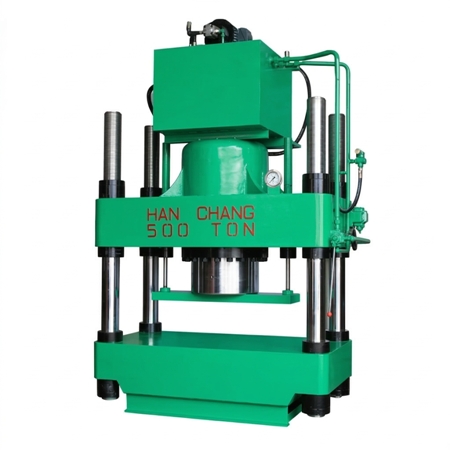
Machine advantages
Effective straightening brings support positions, ram travel and springback together. Straightness checks after unloading show the result and guide further correction, supporting consistent quality and better working efficiency. For manufacturers choosing a shaft straightening press or a press for long metal profiles, Han Chang focuses the equipment arrangement on the actual part.
Put hydraulic force where correction is needed
The pressing head acts on the bent area rather than treating the entire workpiece alike. Defined force positions and ram travel make the correction process easier to manage than repeated hammer correction, helping improve working efficiency.
Match the supports to the shaft or profile
Workpiece length, cross-section and bend location guide the support and pressing-head arrangement. Coordinating the supported span with the point of force gives long shafts and profiles a practical foundation for consistent straightening.
Use springback checks to improve consistency
A metal part changes shape as the load is released. Comparing unloaded straightness with the force position and ram travel helps guide the next correction and reduce over-pressing or under-correction.
Support, pressing and straightness checks
Locate the bend and support the part
Check the bend position and direction. Arrange support points around the part length and cross-section, with the pressing head aligned to the area requiring correction.
Apply localized hydraulic force
Press the bent section using force and ram travel suited to the material and deformation. Where correction is needed along the length, arrange pressing at the relevant sections.
Unload and check straightness
Check springback and straightness after releasing the load. Use the result to guide subsequent pressing positions and ram travel for further correction where needed.
Workpiece materials and applications
Applicable materials
Steel shafts and elongated steel parts
Hydraulic straightening addresses bending in steel components, including distortion after heat treatment. Hardness, heat-treatment condition and cross-section affect the force requirement and springback, making them useful inputs for press selection.
Aluminum parts and metal profiles
Suitable aluminum workpieces and profiles can be corrected through localized pressing. Support surfaces and pressing-head contact positions follow the part contour, bringing force application and surface contact into the same setup decision.
Parts of the same length can need different straightening conditions because their material, hardness and cross-section differ. Match supports, pressing contact and ram travel to the actual part, then compare results using a consistent straightness measurement reference.
Metal straightening applications
Shaft straightening | Prepare parts for machining and assembly
Apply force to the bent area of a shaft with suitable work support. Straightness checks connect the correction stage to the geometric requirements of subsequent machining and assembly.
Long metal profiles | Correct localized bends
Steel and aluminum profiles call for support positions suited to their cross-section and bend direction. Local pressing addresses the sections requiring correction, making part geometry and usable working space central to equipment selection.
Post-heat-treatment parts | Correct distortion before further processing
A straightening stage can address bending that remains after heat treatment. Material hardness, initial deformation and springback guide the pressing conditions, with unloaded straightness providing the basis for judging the result.
Machine and selection information
When comparing hydraulic straightening press suppliers, look beyond pressing force. The support arrangement, usable working space and straightness inspection method should all fit the parts you intend to process.
| Selection item | Selection considerations |
|---|---|
| Workpiece | Steel or aluminum, hardness, heat-treatment condition, length, cross-section and weight. |
| Correction requirement | Bend location and direction, initial deformation and target straightness. |
| Supports and pressing head | Support points, contact surfaces, pressing location and handling clearance. |
| Force and travel | Required straightening force, ram stroke, daylight and springback after unloading. |
| Inspection | Measurement reference, straightness checking method and acceptance requirement. |
Start with a part photo or drawing, its material and approximate length, and where it bends. If you already have a straightness requirement or inspection record, include it so Han Chang can discuss a press arrangement and quotation around your workpiece.
Workpiece support and press configuration
A change in part length, section or material can alter support and pressing-contact requirements. Considering the regular part mix alongside support access and handling clearance helps make the working area useful in daily production.
Record the pressing location, applied force, ram travel and unloaded straightness together. A consistent measurement reference makes these records useful for adjusting the process and comparing results across parts.
Buyer questions
What does Han Chang’s hydraulic straightening press do?
Han Chang’s Automatic Straightening Hydraulic Press corrects bending in steel and aluminum parts, long shafts, profiles and heat-treated workpieces. Supports carry the part while a pressing head applies localized hydraulic force; straightness is checked after unloading to assess the correction.
What matters when selecting a shaft straightening press?
Start with shaft length, cross-section, material, hardness and the bend to be corrected. Support points and pressing-head position define the loaded section, while required force, ram stroke and target straightness guide the equipment arrangement.
Why check straightness after releasing the load?
Metal workpieces spring back when pressing force is removed. Unloaded straightness shows the correction that remains. Comparing that result with the force position and ram travel provides a useful basis for the next adjustment.
How are straightening conditions selected for steel and aluminum profiles?
Use the material, hardness, heat-treatment condition, cross-section and initial bend to select force and ram travel. Match the support and pressing contact surfaces to the profile, then use unloaded straightness and springback observations to guide further adjustment.
What determines hydraulic straightening press price?
The quotation depends on the part length and cross-section, required force, supports, pressing head, stroke and working space. Send Han Chang a part photo or drawing and the correction required to begin a configuration and price discussion; an existing straightness requirement helps refine the selection.
Choose a straightening press around your parts
Send Han Chang a shaft or profile drawing to discuss bend correction, work support and straightness requirements. Start your hydraulic straightening press selection and request a quote.
Reference videos and further reading
- Concrete brick making machine
- Large single-cylinder hot compression molding press
- Large twin-cylinder hot compression molding press
- Three-cylinder long-platen hot press
- Double-cylinder long-platen hot press
- Rubber Compression Molding Machine
- Guarded hot compression molding press
- Reference video: molding equipment ready to ship
- Reference video: Han Chang factory and equipment introduction
- Reference video: molding machine parts