
Guarded Hot Compression Molding Press
Han Chang manufactures a hot compression molding machine with an interlocked guard door for rubber, silicone, phenolic Bakelite and thermoset composites. Its physical guard door is interlocked with machine movement, making it a practical choice for factories that manually charge molds and remove finished parts such as seals, cushioning pads, molded handles and composite covers.
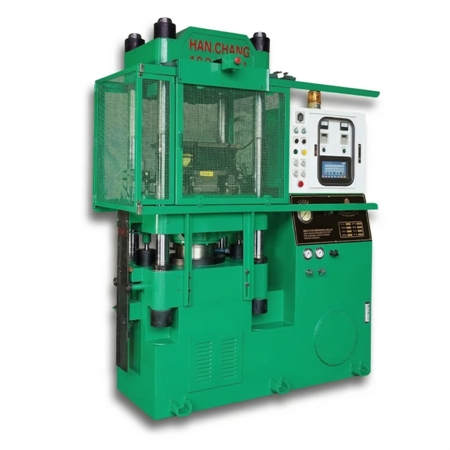
Machine advantages
The press cannot make any movement unless the guard door is closed. Opening the door during operation stops the machine. With this protection built into the workflow, the press combines automatic mold closing, pressing, venting, heated holding and opening with a clear manual handling routine to support consistent quality and efficient production.
A guard door tied to machine movement
For production that requires frequent manual access to the mold, the physical guard door provides a clear separation between handling and machine operation. The machine cannot move with the door unclosed, and opening it during operation stops the machine.
A repeatable cycle for consistent quality
After charging the mold, closing the door and starting the cycle, the press carries out closing, pressing, mold-opening venting, heated holding and opening. Operators handle loading and unloading while the machine runs the forming sequence, supporting an orderly, efficient production routine.
Venting that supports the molding process
Opening and reclosing the mold allows trapped gases to escape during the molding sequence. Heat and pressure holding then complete curing or rubber vulcanization, helping the chosen compound form the required part.
Practical access around the mold
Platen area, daylight, stroke and unloading direction are considered together with the guard door and operator position. This brings mold fit and everyday handling into the same equipment decision rather than treating guarding as an afterthought.
Guarded hot compression and mold venting
Load the heated mold manually
With machine movement stopped, open the guard door and place the prepared molding charge into the heated mold.
Close the guard and start
Close the guard door after loading, then start the molding cycle. The machine cannot make any movement while the door is not closed.
Close, press and vent
The press automatically closes and applies force, with mold-opening and reclosing venting during forming. Keep the guard door closed throughout machine movement.
Hold under heat and pressure
Heated holding completes compound curing or rubber vulcanization. The molding conditions are matched to the material and part requirements.
Open and unload manually
After the cycle opens the mold and machine movement has stopped, open the guard door and remove the finished part manually. The mold is then ready for the next charge.
Materials and molded-product applications
Applicable materials
Rubber molding compounds
Hot compression and vulcanization form rubber sealing, cushioning and contact components. A prepared charge is placed in the mold, then pressed and held to develop the molded shape.
Silicone molding compounds
Silicone gaskets, protective pads and cushioning parts are suitable application directions for matched compression molds. Manual charging accommodates the compound placement needed by each part geometry.
Phenolic Bakelite compounds
Phenolic molding compounds flow and cure in a heated mold to form rigid parts such as handles, knobs and electrical components. Compound selection supports the heat-resistance or insulation requirements of the intended part.
Thermoset composites
Heat-curing composite molding materials can be shaped into covers, housings and industrial panels with suitable tooling. Charge form, reinforcement and flow behavior guide material placement and molding conditions.
Match the compound grade, cure conditions and mold to the part geometry and intended service. Electrical applications also require suitable material selection and product testing.
Mold and product applications
Seals, gaskets and protective grommets
Rubber gaskets for equipment joints, cable grommets and cushioning components need defined molded contours and practical removal access. The guard-door interlock is especially relevant where operators load each charge and retrieve parts directly from the mold area.
Silicone pads and cushioning components
Compression molds shape silicone sealing pads, anti-slip pads and protective contact parts for equipment and electronic-product applications. Venting and heated holding support the forming process, while the guarded workflow keeps manual handling clearly separated from press movement.
Phenolic handles, knobs and insulating parts
Phenolic Bakelite compounds suit molded handles, control knobs and insulating bases when the grade and tooling match the service requirements. Heated compression produces the rigid part, while the interlocked door supports the manual loading and removal routine.
Composite housings and cover panels
Thermoset composite covers, protective housings and industrial panels can be developed around suitable charge forms and molds. Include the mold footprint, open-mold space and removal path in press selection so operators can handle the product effectively through the guarded work area.
Equipment configuration and selection
Select this hydraulic compression molding press around the mold, compound and access requirements. The interlocked guard door and forming cycle are the defining features; platen dimensions, daylight, stroke and pressing force are planned for the production task.
| Selection item | Configuration considerations |
|---|---|
| Guarding | Interlocked physical guard door. An unclosed door prevents machine movement; opening it during operation stops the machine. |
| Molding cycle | Mold closing, pressing, opening/reclosing venting, heated holding and mold opening. |
| Material handling | Manual charging and part removal, with access arranged around the guard door and open mold. |
| Platen and daylight | Selected for mold footprint, height, weight and the part-removal direction. |
| Force and process | Planned from compound requirements, projected cavity area, cavity count and the molding conditions. |
Start with a part photo, material description or an existing mold drawing. You do not need to select press tonnage in advance: Han Chang can help match the mold space, pressing requirements and handling arrangement.
Protective door and production setup
Position the operator, charge containers and finished-part handling area to suit the mold and door opening. A practical layout helps the loading and removal routine fit naturally around the forming cycle.
Rubber, silicone, phenolic and composite materials require suitable heating, force and holding conditions. Build the press specification around the actual compound and part rather than choosing on tonnage alone.
The guard door prevents or stops machine movement when opened. Mold changes and maintenance also require the equipment’s energy-isolation procedures. Include both production access and maintenance needs in the equipment discussion.
Buyer questions
How does the guard-door interlock work?
The Han Chang guarded hot compression molding press cannot make any movement unless the physical guard door is closed. Opening the door during operation stops the machine. This makes the press a strong choice for factories that require manual charging and part removal while prioritizing protection around the mold area.
Which materials and products can this press mold?
The press supports rubber, silicone, phenolic Bakelite and thermoset composite molding materials. With suitable compounds and tooling, application directions include seals, gaskets, cushioning pads, grommets, molded handles and knobs, composite housings and covers. Part geometry and service performance depend on the compound, mold and molding conditions.
What happens after the operator loads the mold?
After manually loading the heated mold, the operator closes the guard door and starts the cycle. The machine closes, presses, vents by opening and reclosing the mold, holds under heat and pressure, and opens the mold. Once machine movement has stopped, the operator opens the guard and removes the part manually. The door stays closed during machine movement.
How are platen size, daylight and tonnage selected?
Platen size and daylight must accommodate the mold footprint, mold height and part-removal space. Pressing force is selected from the compound’s pressure requirements, projected cavity area and cavity count. The guard-door opening and operator position are included so mold fit and practical access work together.
What is needed to request a quotation?
Send a part photo, material description or available mold drawing to Han Chang. Dimensions, planned output and factory power details can follow as the discussion develops. We use the molding and handling requirements to recommend a suitable guarded press configuration and prepare a quotation.
Choose a guarded press around your molding work
Share your part photos, compound or mold drawings with Han Chang. We will help match hot compression molding requirements with mold space and manual handling access, then provide a suitable equipment configuration and quotation.
Reference videos and further reading
- Large single-cylinder hot compression molding press
- Large twin-cylinder hot compression molding press
- Three-cylinder long-platen hot press
- Rubber Compression Molding Machine
- Reference video: molding equipment ready to ship
- Reference video: Han Chang factory and equipment introduction
- Reference video: molding machine parts