
Double-Cylinder Long-Platen Hot Press
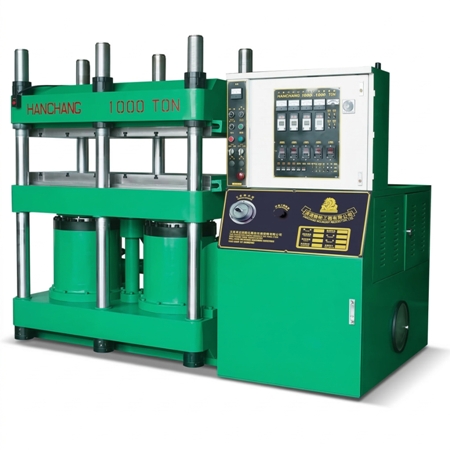
Han Chang’s Double-Cylinder Long-Platen Hot Press is a hydraulic compression molding machine for elongated rubber parts, strip seals and industrial panels. Two lower hydraulic cylinders work together to raise one shared long platen, supporting the mold through closing, heating and pressure holding. Suitable molding materials include rubber, silicone, composites and phenolic (Bakelite) compounds.
Machine advantages
Choose this press when your tooling needs support along its length as well as the right total pressing force. Opening and reclosing the mold for venting helps release trapped gas during curing for consistent molding quality. Five total-tonnage options and customizable platen dimensions, daylight and stroke let you match the press to both the mold and the way operators handle long parts.
Support the long mold on one working platen
The two lower cylinders act on the same platen, combining long-mold support with upward mold closing and pressing. This arrangement suits tooling for elongated seals, rubber strips and panels, with the working surface sized around the mold footprint.
Combine curing and venting for consistent quality
Heating and pressure holding provide the conditions for rubber and silicone vulcanization or composite and phenolic curing. Opening and closing the mold for venting helps trapped gas escape, reducing its effect on molding quality.
Make room for efficient loading and part removal
Custom platen dimensions accommodate the mold footprint; daylight and stroke accommodate mold height and opening requirements. Matching that space to manual loading and long-part removal improves operating efficiency and makes the press practical for everyday production.
Long-platen compression and mold venting
See Han Chang hot compression molding equipment in operation.
Official Han Chang video · Click to watch
Load the molding charge by hand
The operator places the molding material in the mold, arranging the charge for the part shape and required material quantity.
Raise the platen, press and vent
Both lower hydraulic cylinders raise the same long platen to close the mold. The material is heated and held under pressure, with mold opening and reclosing for venting during the molding process to support gas release and the required cure.
Open the mold and unload manually
Once molding is complete, the mold opens and the operator removes the part for any required trimming and inspection.
Materials and long-part applications
Applicable materials
Rubber and silicone molding compounds
Use heated compression for strip seals, elongated rubber parts and flat pads. The mold defines the part profile, heat and pressure holding support vulcanization, and mold venting helps release trapped gas.
Heat-curing composite materials
Industrial panels and molded cover panels can be produced with suitable heat-curing composites and tooling. The long platen supports the panel mold while heat and pressure provide the required curing conditions.
Phenolic (Bakelite) molding compounds
Phenolic compounds are hot-compression molded into industrial plates and strip-shaped parts. Insulating plates are a material- and tooling-dependent application; the chosen compound and finished part must meet the intended electrical requirements.
Heating, pressure-holding and venting conditions are selected for the molding compound, part thickness and tool design. Application suitability depends on the actual material and mold.
Long molded parts and panels
Strip seals for equipment joints
Molded rubber or silicone strips can seal equipment mating surfaces. A long mold creates the required profile, supported on the shared platen during heated compression; mold venting helps gas escape as the material cures.
Elongated rubber pads and flat cushioning pieces
Rubber strips and flat pads used at equipment contact surfaces need tooling that matches their length, width and thickness. The long working platen supports that tooling, while suitable opening space makes manual removal of the cured parts more convenient.
Composite covers and phenolic industrial plates
Molded panel-shaped covers and phenolic plates bring together a broad mold footprint and material-specific curing requirements. Platen dimensions can be matched to the tool, with daylight and stroke arranged for loading and removing the finished panel.
Total press tonnage and selection
Select from five combined-force classes, then match the mold space. Total tonnage is chosen using projected molding area, cavity count and required molding pressure; platen dimensions, daylight and stroke address the tool footprint, height and handling clearance.
| Selection item | Configuration considerations |
|---|---|
| Combined machine force | 400 / 600 / 800 / 1000 / 1200 tons; each figure is the total for both cylinders. |
| Cylinder and platen arrangement | Two lower hydraulic cylinders jointly raise one shared long platen. |
| Platen dimensions | Customizable to the mold length, width and support requirements. |
| Daylight and stroke | Customizable for mold height, closing movement and manual loading/unloading clearance. |
| Molding process | Heated compression and pressure holding with mold venting by opening and reclosing. |
Start with a part photo or drawing, the material and approximate dimensions. If you already have tooling, add its footprint, height and cavity count. Han Chang can then discuss total tonnage and mold-space options with you.
Long molds and production setup
Both designs use lower cylinders to raise a shared long platen and follow the same hot-compression principle. This double-cylinder press offers 400 to 1200 tons of combined force. Compare the cylinder arrangement, required total force and available mold space against your tooling, rather than selecting by cylinder count alone.
A long tool needs a suitable support surface, but operators also need room to load the charge and remove the cured part. Consider mold height and the direction of part removal when specifying daylight and stroke, so the working space suits the production task.
Buyer questions
What does the Double-Cylinder Long-Platen Hot Press make?
Han Chang’s Double-Cylinder Long-Platen Hot Press processes rubber, silicone, composites and phenolic (Bakelite) molding materials into strip seals, elongated rubber parts and industrial panels. Two lower hydraulic cylinders raise one shared long platen to support the mold during heated compression, pressure holding and mold venting.
Are the 400 to 1200-ton ratings total force or force per cylinder?
The 400, 600, 800, 1000 and 1200-ton ratings are combined machine force for both cylinders, not force per cylinder. Choose total tonnage using projected molding area, cavity count and material molding pressure, then match the platen dimensions and opening space to the mold.
How are the material, mold venting and finished parts handled?
The operator loads the material by hand. Both lower cylinders then raise the shared platen to close the mold for heating and pressure holding. Opening and reclosing the mold for venting helps release gas during molding. After curing, the mold opens and the operator removes the part manually.
How does this differ from a three-cylinder long-platen press?
The double-cylinder design uses two lower hydraulic cylinders to raise one shared long platen; the three-cylinder design uses three. They follow the same hot-compression principle. This press has five combined-force options from 400 to 1200 tons, so compare total force, mold support and handling space when choosing a configuration.
Which dimensions can be customized, and how do I request a price?
Platen dimensions, daylight and stroke can be customized. Send Han Chang a part drawing or photo, material and approximate size; include the mold footprint and height if tooling is available. We can discuss the required total tonnage and working space, then prepare a quotation for the selected press configuration.
Match your long-part tooling to the right hot press
Send Han Chang your seal, rubber pad or industrial panel requirements. We can help you select the double-cylinder press tonnage, platen dimensions and opening space, and provide a quotation for your production needs.
Reference videos and further reading
- Large single-cylinder hot compression molding press
- Large twin-cylinder hot compression molding press
- Rubber Compression Molding Machine
- Guarded hot compression molding press
- Reference video: molding equipment ready to ship
- Reference video: Han Chang factory and equipment introduction
- Reference video: molding machine parts