
Hydraulic Deep Drawing Press
Han Chang’s Hydraulic Deep Drawing Press forms stainless steel and steel sheet into pot bodies, basins and similar drawn metal vessels. An operator loads the blank, the hydraulic cylinder moves slowly downward to draw the sheet through the action of the tooling, and the operator removes the formed part by hand.
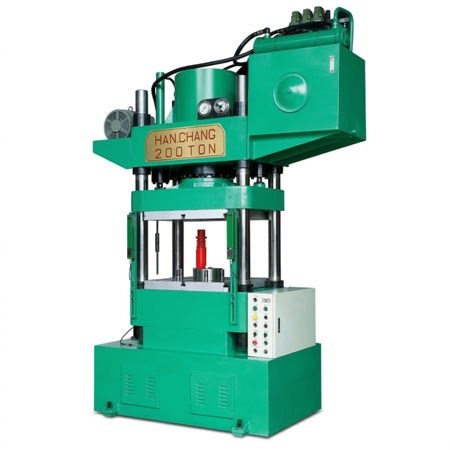
Machine advantages
For cookware and utensil manufacturers, a good press choice connects the vessel shape with both forming and part removal. The slow downward forming stroke works with the die to develop the base and sidewall. Ejection can be custom-specified as an option to assist release, giving manufacturers a practical way to improve handling efficiency alongside consistent forming quality.
A forming stroke suited to drawn vessel bodies
The hydraulic cylinder advances slowly downward while the tooling draws the blank into a three-dimensional shape. This makes the press a practical choice for the pot and basin forming stage, where the base, corner transition and sidewall must be considered together. Suitable sheet and tooling support consistent forming quality.
Optional ejection matched to part release
A deeper pot body or a different basin wall profile changes how the part leaves its die. Ejection can be custom-specified to assist release before manual removal. Including this option in press selection helps make daily handling smoother and improves efficiency at the forming station.
Clear stages for organizing the workstation
Operators load the sheet blank and remove the drawn vessel, while the hydraulic drive provides the slow forming action. The press fits a manually handled cookware-forming station, with incoming blanks and drawn bodies transferred to and from the factory’s existing operations.
Slow drawing stroke and manual handling
Load the sheet blank
The operator places the stainless steel or steel blank in the appropriate tooling position for the pot body or basin being formed.
Draw with a slow downward stroke
The hydraulic cylinder descends slowly. Through the action of the die and forming tool, the sheet develops the required base, sidewall and vessel profile.
Remove the formed vessel by hand
After forming, the operator removes the part and checks its shape. Where custom ejection is specified, it assists release from the tooling before manual removal.
Metal sheet and cookware applications
Applicable metal sheets
Stainless steel sheet | Pot and basin bodies
Stainless steel grade and formability matter when planning a drawing operation. Common austenitic grades work-harden as they deform, so sheet thickness, blank geometry and tooling radii belong in the same selection discussion. This keeps the forming arrangement focused on the actual vessel.
Steel sheet | Drawn metal containers
Steel sheet is used for drawn pot bodies, basins and similar open vessels. Its ductility and thickness, together with the required wall depth, guide the tooling and forming sequence as the flat blank becomes a three-dimensional part.
Select around the sheet and the vessel together: blank size, opening diameter, draw depth and base-to-wall radii affect how material moves into the tooling and the forming force the job requires.
Cookware and basin drawing applications
Stainless steel pot bodies | Cookware forming
The press serves the body-drawing stage of cookware manufacture, forming a base and sidewall from sheet. Pot depth and the radius joining the base to the wall are useful starting points for matching the tooling and drawing sequence to the intended shape.
Stainless steel basins | Shallow and deeper vessel profiles
Basin forming brings opening diameter, wall slope and depth into the same tooling decision. A wide, shallow basin and a deeper vessel place different demands on sheet flow and removal space. Selecting around the complete profile gives the forming station a clear product purpose.
Steel-sheet pots and basins | Open container bodies
For manufacturers forming pots and basins from steel sheet, the die develops the required base, wall height and corner transitions. This concentrates vessel-body forming in a defined operation that can feed the factory’s subsequent manufacturing stages.
Machine and selection information
Choose a deep drawing press around the vessel you need to make. The factors below connect material and tooling with forming force, working space and manual part removal, providing a useful basis for comparing a press quotation.
| Specification | Selection considerations |
|---|---|
| Sheet condition | Stainless steel or steel grade, thickness and drawing formability. |
| Blank and vessel geometry | Blank dimensions, opening diameter, base size, wall depth and corner radii. |
| Forming force and sequence | Sheet deformation behavior, vessel geometry and tooling arrangement considered together. |
| Tooling and working space | Die footprint and height, forming travel requirements and access for manual handling. |
| Removal and optional ejection | Part release direction, removal clearance and the need for custom ejection. |
A product photo or drawing is enough to start the conversation. Add the material and approximate dimensions; if you already have tooling, its footprint and height help Han Chang discuss the press fit and quotation.
Sheet metal, tooling and product requirements
Two pots with the same opening can have very different depths and base radii. The corner transition influences the sheet’s path into the wall, while depth changes the extent of deformation. Looking at the whole profile makes the tooling and press requirements easier to understand.
The base, wall and corner transitions provide clear locations for checking the drawn shape. If releasing the vessel from the die is a handling difficulty, optional custom ejection is a useful purchasing consideration that connects part release with manual removal.
Buyer questions
What is this hydraulic deep drawing press used for?
Han Chang’s Hydraulic Deep Drawing Press forms stainless steel and steel sheet into pot bodies, basins and similar drawn vessels. The operator loads the blank, a hydraulic cylinder moves slowly downward to form the sheet with the tooling, and the operator removes the part manually.
How does deep drawing create a pot or basin?
A flat sheet blank is formed by tooling into a vessel with a base and sidewall. The blank geometry, material and required depth guide the drawing sequence. Han Chang’s press provides the slow downward hydraulic-cylinder action for this metal-forming operation.
What should cookware and utensil manufacturers consider when selecting a press?
Start with the pot body or basin profile, sheet grade and thickness. Opening diameter, wall depth and base radii help define the forming requirements, while the die dimensions and part-removal path define working-space needs. This links press selection to a specific vessel-forming task.
How can ejection be specified for my pot or basin?
Ejection is an optional custom-specified feature. It can be arranged around the vessel shape, tooling and release direction to assist the part out of the die before the operator removes it by hand.
Why do stainless steel grade and draw depth matter?
Grades differ in drawing behavior, and common austenitic stainless steels work-harden during deformation. Greater depth also changes the forming demands. Material, sheet thickness, blank size and tooling radii therefore guide the required force and drawing sequence together.
What should I send in an RFQ for a deep drawing press?
Send Han Chang a pot or basin photo or drawing, the sheet material, thickness and approximate dimensions. Existing die dimensions and your preferred removal arrangement are helpful additions. Mention any need for custom ejection so it can be included in the quotation discussion.
Choose a press around the vessels you make
Send Han Chang your pot or basin drawing to discuss sheet drawing, optional ejection and a press quotation.
Reference videos and further reading
- Concrete brick making machine
- Large single-cylinder hot compression molding press
- Large twin-cylinder hot compression molding press
- Three-cylinder long-platen hot press
- Double-cylinder long-platen hot press
- Rubber Compression Molding Machine
- Guarded hot compression molding press
- Reference video: molding equipment ready to ship
- Reference video: Han Chang factory and equipment introduction
- Reference video: molding machine parts