
Two-Color Melamine Cup Molding Machine
Han Chang’s two-color melamine machine for cups combines hydraulic side locking with staged hot compression molding of melamine molding compound. It produces two-color cups, basins, shaped containers and artistic pieces, helping crockery manufacturers develop products with both distinctive shapes and contrasting body colors.
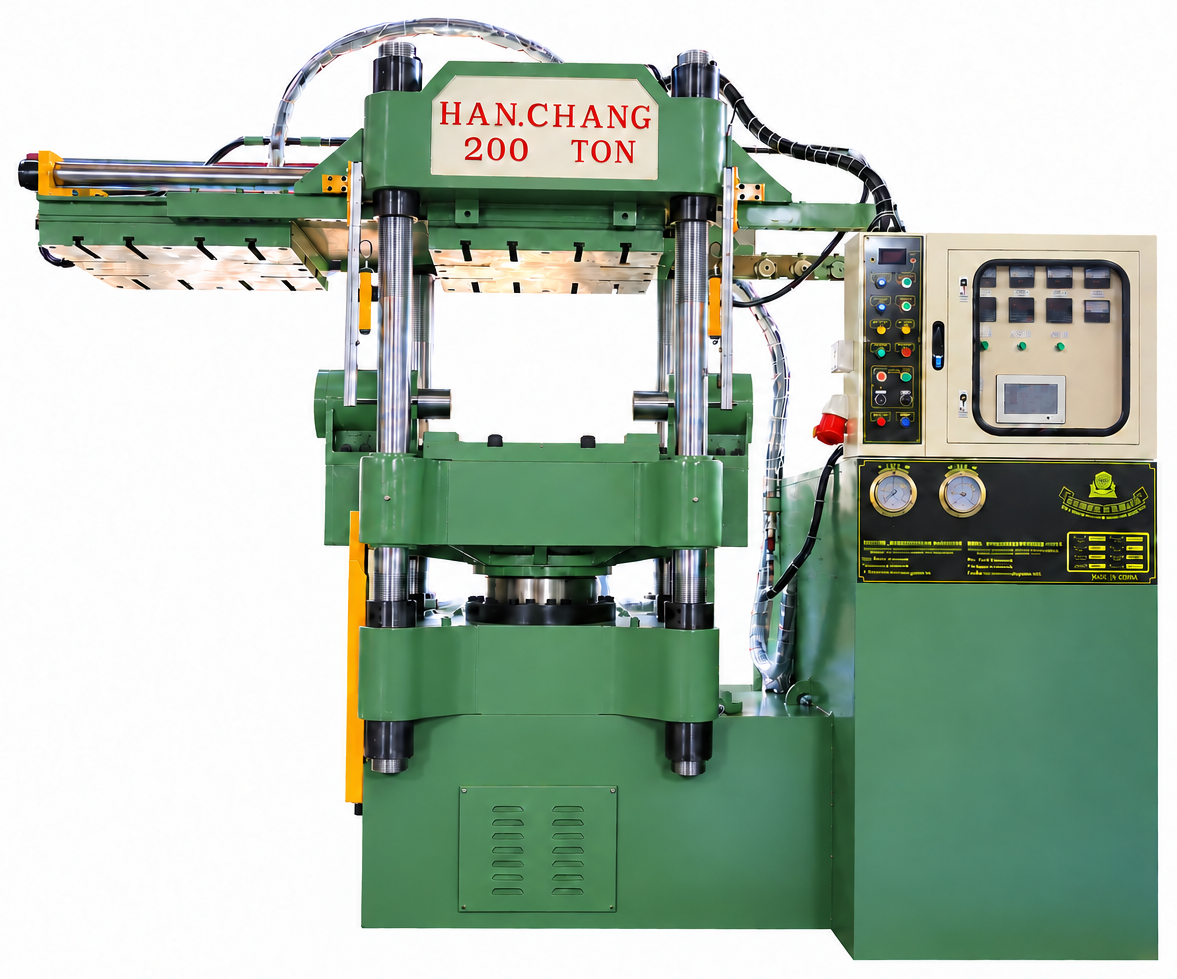
Machine advantages
For handled cups and waisted outer profiles, split molds provide a sideways release path. Two colored molding-compound charges add contrast to the body itself. Together, these functions help manufacturers move beyond changes in surface decoration and develop distinctive deep-profile containers and shaped ware with coordinated color designs.
Sustained side locking keeps the outer mold closed during pressing, while heat, main compression, pressure holding and adjustable degassing support consistent forming quality. The machine runs the programmed pressing stages; operators handle the separate material charges and finishing additions. This clear division of work supports efficient production. Send Han Chang your product concept to start selecting the right press.
Develop shape and color together
A distinctive cup needs more than a color change: its handle, waist or curved profile must also release from the mold. This two-color cup press combines side-parting tooling with staged body-color molding, giving product developers a practical way to plan the outer shape, color layout and tooling as one project.
Keep split tooling locked during compression
The hydraulic side molds remain locked while the lower main cylinder presses upward. This keeps the split outer mold closed as heat and compression form the product. Sustained side locking supports stable conditions around the body profile and mold joint, providing a sound forming basis for two-color shaped ware.
Organize production around programmed pressing
Automatic pressing stages handle compression, degassing and forming, while operators organize the two material charges, decals and glazing powder. Adjustable degassing helps match the process to the compound, wall thickness and tooling, supporting consistent quality and efficient day-to-day operation.
Build a broader product range around cup-forming capability
With the corresponding molds, production can extend from two-color drinkware to basins, shaped serving containers and decorative pieces. Crockery manufacturers can connect familiar material preparation, decoration, glazing and finishing operations with new product shapes, broadening the kinds of orders they can pursue.
Two-color cup and shaped-product molding
Lock the side molds and load the first charge
The side molds close and lock. The operator places the first-color melamine molding compound into the heated tool, ready for the pressing program.
Form the two body colors in stages
The machine runs the first compression, degassing and forming stage. The operator adds the second-color compound as part of the two-color sequence, followed by the second pressing stage. The product mold and charge arrangement establish the intended color layout.
Add decals when the design calls for them
After the two-color body is formed and the mold opens, the operator applies decal paper for tableware requiring a surface pattern. A separate decal pressing program follows, adding decoration to complement the body colors.
Glaze, open and remove the product
For melamine tableware, the operator adds glazing powder after body molding or the decal program has finished and the mold has opened. The glazing program completes the surface treatment, followed by opening and manual removal for edge grinding and polishing. Surface finishing for artistic pieces is planned around the intended design.
Product applications
Two-color mugs, soup cups and dessert cups
Matched side-parting molds accommodate handled mugs and soup cups, as well as waisted dessert and ice-cream cups. Two body colors give everyday cup designs a distinct visual identity, making this a useful production direction for coordinated restaurant drinkware and household cup collections.
Basins, shaped bowls and serving containers
Combine practical container forms with two-color styling. Products whose outer tooling needs to open sideways can use the cup press’s split-mold capability. For deeper profiles, mold height, working opening and the part-removal path are considered together so the design fits the available molding and handling space.
Artistic forms and decorative pieces
Melamine ornaments and sculptural decorative pieces can combine contoured shapes with contrasting body colors. Plan the parting lines, release direction and color layout around the artwork to turn the concept into a form suited to compression molding. This extends the machine’s application beyond conventional tableware.
150–400 ton specifications and selection
Choose from 150, 200, 300 and 400 ton Two-Color Melamine Cup Molding Machines. Match main pressing force to projected area, cavity count and molding requirements, then compare platen dimensions, stroke and daylight for the tool and the available operating space.
Spec / Type HCEM-150
| Clamping force (Ton) | 150 |
|---|---|
| Plate size (m/m) | 660×620 |
| Cylinder diameter (m/m) | 300/315 |
| Stroke (m/m) | 480 |
| Daylight (m/m) | 700 |
| Pump pressure (kg/cm2) | 210 |
| Motor (HP) | 7.5 |
| Heater capacity (Kw) | 10.6 |
| Oil reservoir capacity (gallon) | 100 |
| Machine size LxWxH (m/m) | 2030x1350x2370 |
| Net weight approx (kg) | 4800 |
Spec / Type HCEM-200
| Clamping force (Ton) | 200 |
|---|---|
| Plate size (m/m) | 660×620
720×720 |
| Cylinder diameter (m/m) | 368 |
| Stroke (m/m) | 500 |
| Daylight (m/m) | 820 |
| Pump pressure (kg/cm2) | 210 |
| Motor (HP) | 10 |
| Heater capacity (Kw) | 15.2 |
| Oil reservoir capacity (gallon) | 120 |
| Machine size LxWxH (m/m) | 2300x1350x2670 |
| Net weight approx (kg) | 5700
7500 |
Spec / Type HCEM-300
| Clamping force (Ton) | 300 |
|---|---|
| Plate size (m/m) | 720×720
900×860 |
| Cylinder diameter (m/m) | 450 |
| Stroke (m/m) | 560 |
| Daylight (m/m) | 810 |
| Pump pressure (kg/cm2) | 210 |
| Motor (HP) | 15 |
| Heater capacity (Kw) | 20 |
| Oil reservoir capacity (gallon) | 200 |
| Machine size LxWxH (m/m) | 2480x1490x2945 |
| Net weight approx (kg) | 8200
11000 |
Spec / Type HCEM-400
| Clamping force (Ton) | 400 |
|---|---|
| Plate size (m/m) | 720×720
900×860 |
| Cylinder diameter (m/m) | 500 |
| Stroke (m/m) | 560 |
| Daylight (m/m) | 950 |
| Pump pressure (kg/cm2) | 210 |
| Motor (HP) | 15 |
| Heater capacity (Kw) | 27 |
| Oil reservoir capacity (gallon) | 250 |
| Machine size LxWxH (m/m) | 2580x1500x3800 |
| Net weight approx (kg) | 9000
12000 |
Select useful mold space as well as pressing force. Product depth, side-opening direction, tool height and operator access for charging and removal all influence the fit. Share your product drawing or existing mold details with Han Chang to discuss a suitable specification.
Tooling and production-line planning
A product photo, drawing or approximate dimensions are enough to begin a discussion. As the machine manufacturer, Han Chang considers the molding compound, projected area, cavity count and planned output, then matches main pressing force, platen size, stroke and daylight to the job.
For an existing mold, share its photos, dimensions, weight and mounting details. Han Chang can discuss side locking, lateral mold opening, removal access and the tooling requirements for staged two-color molding. This helps establish what can be retained and what needs adaptation before the equipment and tooling scope is quoted.
For a melamine cup production line, Han Chang can supply high-frequency preheaters, edge-grinding machines, polishing machines and decal-paper drying machines along with the molding press.
Buyer questions
When should I choose a two-color cup press rather than a standard cup or tableware press?
Choose the Two-Color Melamine Cup Molding Machine when the product needs both side-parting cup tooling and two body colors. It retains cup-forming functions and adds two-color molding. For single-body-color cup orders, compare the Melamine Cup Molding Machine. For two-color bowls or plates that release through conventional vertical-opening tooling, compare the Two-Color Melamine Molding Machine.
Which cup and container shapes benefit from split molds?
Handled, waisted and irregular outer profiles that need sideways mold release are key applications. Two-color cups, basins, shaped containers and artistic pieces can be planned with the appropriate tooling. Depth alone does not determine the need for split molds: the release direction, mold height and removal clearance matter. Internal undercuts also require a suitable inner-tool design.
How does two-color molding differ from decal decoration?
Two-color molding uses two colored melamine molding-compound charges to form the product body in stages. Decal paper adds a surface pattern after body forming. Start with a color sketch or reference product to discuss the desired color distribution, then match it to the mold and charge arrangement. Tableware requiring a pattern can proceed through a separate decal stage before glazing.
How are automatic pressing and manual operations divided?
The machine runs the programmed compression, degassing and forming stages, with the side molds locked during pressing. Operators load the colored compounds in stages. For decorated tableware, they apply decal paper and start the separate decal program, then add glazing powder for the glazing program. The finished product is removed manually after opening and moves on to edge grinding and polishing.
Can I use my existing melamine cup molds?
Existing tooling is a useful starting point for a compatibility discussion. Review its footprint, height, mounting and side-opening clearance together with the tooling arrangement, charge access and color layout needed for two-color production. Photos and drawings help identify parts that can be retained and any adaptations to include in the equipment and mold quotation.
What information helps select the press and obtain a quotation?
Begin with the product shape, dimensions, intended color layout and planned output. Main pressing force is selected around the molding compound, projected area and cavity count, then matched with platen size, stroke, daylight and side-mold space. Include existing mold details where available. Han Chang can discuss the configuration and quotation alongside the two charging stages, pressing, surface treatment and part handling needed for your production plan.
Bring your next two-color cup or shaped product into production
Send Han Chang a product photo, drawing or color concept for the drinkware, basins or decorative pieces you plan to make. We can help match a two-color melamine moulding machine to the shape and tooling, then discuss machine price and quotation scope for a stand-alone press or a melamine cup production line.