
Double-Layer Urea Toilet Seat Molding Machine | Synchronized Dual-Level System
Han Chang’s double-layer urea toilet seat moulding machine uses a chain synchronization mechanism to make the mold sets at the upper and lower levels vent, close and open simultaneously, with a zero-second timing difference. This hydraulic compression molding machine molds UF/UMC compound into toilet seat rings, lids and sanitary parts, combining two mold sets with coordinated movement in one machine.
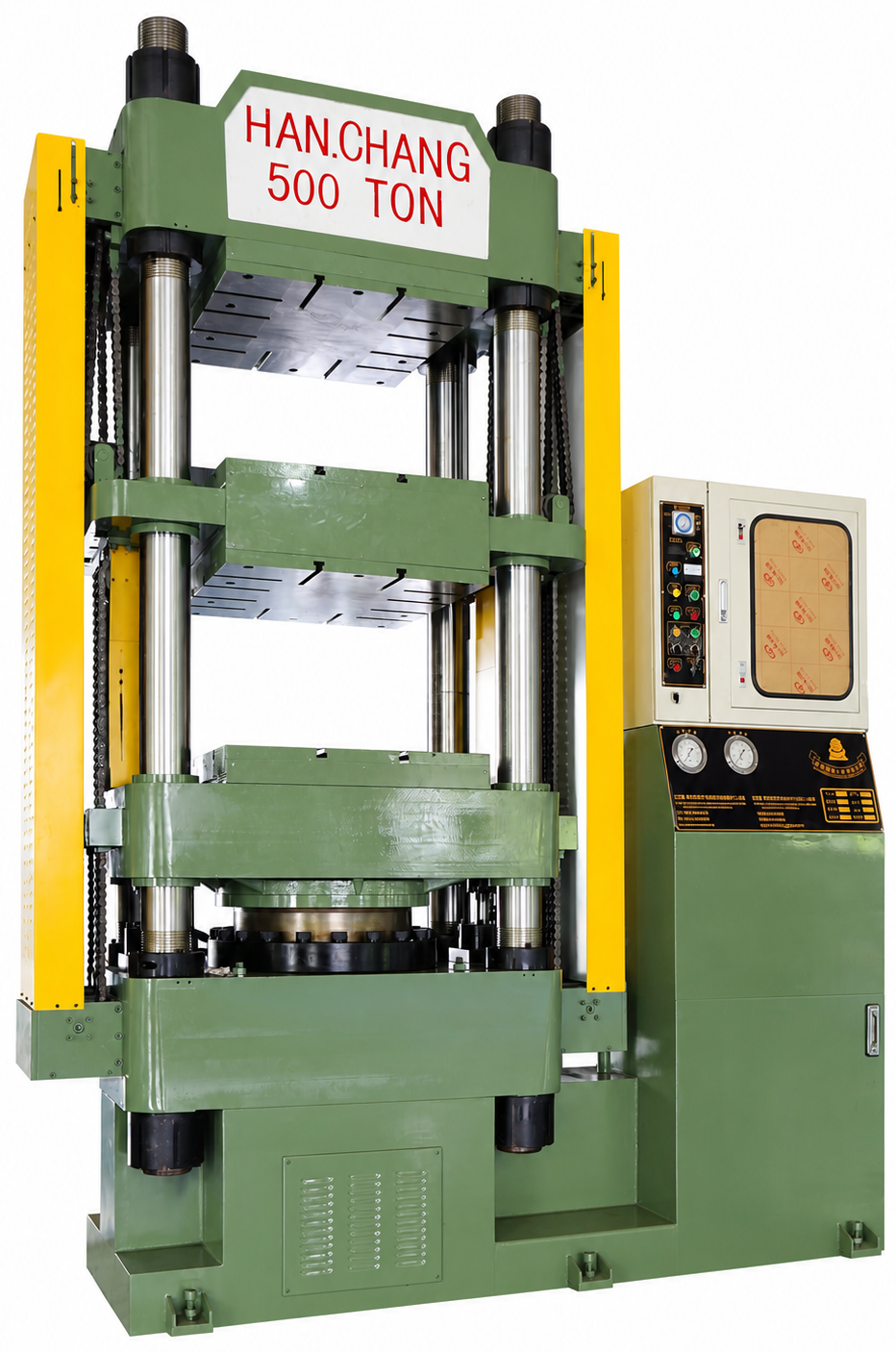
Machine advantages
Choose this version when synchronized movement is a priority for your two-mold production layout. It retains the applications, specifications and molding functions of the double-layer toilet seat press, with chain synchronization as its defining feature. One operator controls both mold sets, helping your factory use floor space effectively and maintain a consistent production rhythm.
Chain-linked motion at both working levels
The chain mechanism synchronizes the two stacked mold sets during venting, closing and opening. Each action occurs at both levels with a zero-second timing difference, giving manufacturers a clear mechanical synchronization feature to specify when purchasing a double-layer UF toilet seat press.
A consistent venting and closing sequence
Both mold sets vent together and close together before pressing and pressure holding continue. Keeping the two levels on the same motion schedule supports stable molding quality and efficient operation with UF/UMC compound.
Two mold sets within one press footprint
The upper and lower working levels each accommodate one mold set, controlled by one operator. This vertical arrangement brings two molding jobs into one machine and helps sanitary-product factories make productive use of available floor space.
Arrange seat rings and lids around your orders
Both levels can mold the same product or different products, such as a seat ring and lid. The two mold sets must have equal thickness and suit the shared pressing, venting and pressure-holding conditions.
Recall settings for repeat production
A Mitsubishi PLC, Fuji Electric touchscreen and recipe/parameter memory are standard. Operators can manage molding settings centrally and recall saved data when a regular product returns to production.
Synchronized dual-level molding process
See the Han Chang double-layer UF toilet seat molding machine in operation.
Official Han Chang video · Watch on YouTube
Set up two matched mold sets
Install one mold set at each working level, with equal mold thickness. Select the UF/UMC compound and molding conditions for the intended parts; the two sets may produce identical parts or a suitable combination of products.
Close both levels together
The chain synchronization mechanism coordinates closing of the mold sets at the upper and lower levels, with a zero-second timing difference, ready for heated hydraulic compression.
Vent together, then press and hold
During mold venting, both levels move together. The mold sets close simultaneously and continue through the pressing and pressure-holding stages required to form the toilet seat rings, lids or other sanitary parts.
Open both mold sets simultaneously
After the molding stage, both levels open with a zero-second timing difference, ready for part removal and the next production arrangement. Closing, venting and opening all benefit from the same chain-synchronized movement.
Materials and sanitary applications
UF toilet seat rings and lids
Produce the molded components for complete toilet seat assemblies using UF/UMC urea-formaldehyde molding compound. Two stacked mold sets suit batch production or coordinated ring-and-lid orders. Each component uses its corresponding tooling, with equal thickness required for the two mold sets.
Washbasins and sanitary components
The press also hot-molds UF/UMC washbasins and other thermoset sanitary parts with the appropriate tooling. Factories can organize two molding jobs within the same machine while serving different products in the same material family.
Production layouts that prioritize synchronized motion
For buyers specifying a double-layer toilet seat manufacturing machine, this chain-synchronized version combines vertical mold capacity with simultaneous venting, closing and opening. It uses the same specification range as the existing double-layer press, so tonnage, platen space, daylight and stroke remain practical selection points.
Specifications and selection
Choose from HCB-300, HCB-400, HCB-500 and HCB-600, covering 300 to 600 tons of clamping force. Specifications match the double-layer urea toilet seat press. Open each model below to compare platen dimensions, stroke, daylight, motor power, heating capacity and machine dimensions.
Spec / Type HCB-300
| Clamping force (Ton) | 300 |
|---|---|
| Plate size (m/m) | 720×720 900×860 |
| Cylinder diameter (m/m) | 450 |
| Stroke (m/m) | 560 |
| Daylight (m/m) | 800 |
| Pump pressure (kg/cm2) | 210 |
| Motor (HP) | 15 |
| Heater capacity (Kw) | 20 |
| Oil reservoir capacity (gallon) | 200 |
| Machine size LxWxH (m/m) | 2480x1490x2945 |
| Net weight approx (kg) | 9000 10200 |
Spec / Type HCB-400
| Clamping force (Ton) | 400 |
|---|---|
| Plate size (m/m) | 660×620 720×720 900×860 |
| Cylinder diameter (m/m) | 500 |
| Stroke (m/m) | 560 |
| Daylight (m/m) | 800 |
| Pump pressure (kg/cm2) | 210 |
| Motor (HP) | 15 |
| Heater capacity (Kw) | 27 |
| Oil reservoir capacity (gallon) | 250 |
| Machine size LxWxH (m/m) | 2580x1500x3800 |
| Net weight approx (kg) | 9000 10200 11800 |
Spec / Type HCB-500
| Clamping force (Ton) | 500 |
|---|---|
| Plate size (m/m) | 800×800 900×900 |
| Cylinder diameter (m/m) | 560 |
| Stroke (m/m) | 580 |
| Daylight (m/m) | 800 |
| Pump pressure (kg/cm2) | 210 |
| Motor (HP) | 15 |
| Heater capacity (Kw) | 30 |
| Oil reservoir capacity (gallon) | 250 |
| Machine size LxWxH (m/m) | 2810x1705x3135 |
| Net weight approx (kg) | 13500 15500 |
Spec / Type HCB-600
| Clamping force (Ton) | 600 |
|---|---|
| Plate size (m/m) | 900×900 1200×1000 |
| Cylinder diameter (m/m) | 620 |
| Stroke (m/m) | 580 |
| Daylight (m/m) | 800 |
| Pump pressure (kg/cm2) | 210 |
| Motor (HP) | 20 |
| Heater capacity (Kw) | 35 |
| Oil reservoir capacity (gallon) | 250 |
| Machine size LxWxH (m/m) | 2810x1705x3135 |
| Net weight approx (kg) | 16000 18700 |
Start with a product photo or drawing if you have not selected a tonnage. For existing tooling, add the dimensions, thickness and cavity information for both mold sets. Han Chang can then discuss the material’s molding requirements, projected area, tooling space and factory utilities with you. Where several platen sizes and weights are listed, confirm their combination for the quoted configuration.
Selection and service support
Standard controls and core pulling
The Mitsubishi PLC, Fuji Electric touchscreen, recipe/parameter memory and core-pulling function are standard, supporting production setup and the tooling functions needed for sanitary-part molding.
Standard equipment and optional connectivity
Safety light curtains, CE and Japanese-brand oil seals are standard; IoT is optional. The chain synchronization mechanism is the defining feature of this synchronized dual-level version.
Remote technical support
Send fault videos, control-screen information and upper/lower mold movements through the website’s existing messaging channels. Han Chang technicians can assist with diagnosis, inspection and adjustment guidance for issues that can be resolved remotely.
Buyer questions
How does the synchronized version differ from the existing double-layer press?
The applications, specifications and molding functions are the same. This version uses a chain synchronization mechanism so the mold sets at the upper and lower levels vent, close and open simultaneously, with a zero-second timing difference. The purchasing distinction is the synchronization mechanism, rather than a different product range or tonnage range.
What does a zero-second timing difference mean?
It refers to the timing difference between the two stacked mold sets during venting, closing and opening. Both levels perform each of these actions simultaneously through the chain synchronization mechanism, keeping their movement on the same schedule.
Which products can this UF toilet seat molding machine make?
It molds UF/UMC urea-formaldehyde compound into toilet seat rings, lids, washbasins and other thermoset sanitary parts. Product geometry comes from the corresponding mold, and the two working levels can accommodate identical products or a suitable combination of different products.
Can the upper and lower mold sets produce different parts?
Yes. For example, a seat ring and lid can use their corresponding mold sets at the two levels. Both sets must have equal thickness, and the products and compounds must suit the shared pressing, venting and pressure-holding conditions.
Which HCB models are available?
The specification range comprises HCB-300, HCB-400, HCB-500 and HCB-600, corresponding to 300, 400, 500 and 600 tons. Select around material molding requirements, projected part area, cavity arrangement, tooling dimensions, daylight and stroke.
Which controls and equipment are standard?
A Mitsubishi PLC, Fuji Electric touchscreen, recipe/parameter memory, core pulling, safety light curtains, CE and Japanese-brand oil seals are standard, with remote technical support available. IoT is optional.
How can I request a machine quotation?
Send a product photo or drawing, the molding compound and your planned output. If tooling is available, include the dimensions, thickness and cavity information for both mold sets. Han Chang will discuss the HCB model, heating requirements, factory voltage and optional equipment to prepare a configuration and quotation.
Specify synchronized motion for your two-mold production
Send Han Chang your toilet seat ring, lid or sanitary-part drawing and tell us about your material and production plans. We can help select the synchronized double-layer press and configuration for your tooling, then prepare a formal equipment quotation. Han Chang is a molding machine manufacturer offering UF toilet seat production line services. The machine price and line quotation depend on the agreed equipment and service scope.