
Double-Layer Urea Toilet Seat Molding Machine
Han Chang manufactures this double-layer urea toilet seat moulding machine, a hydraulic compression molding machine that processes UF/UMC compound into seat rings, lids and sanitary parts. Upper and lower working levels accommodate two mold sets that press, degas and hold pressure simultaneously, with one operator controlling both molds.
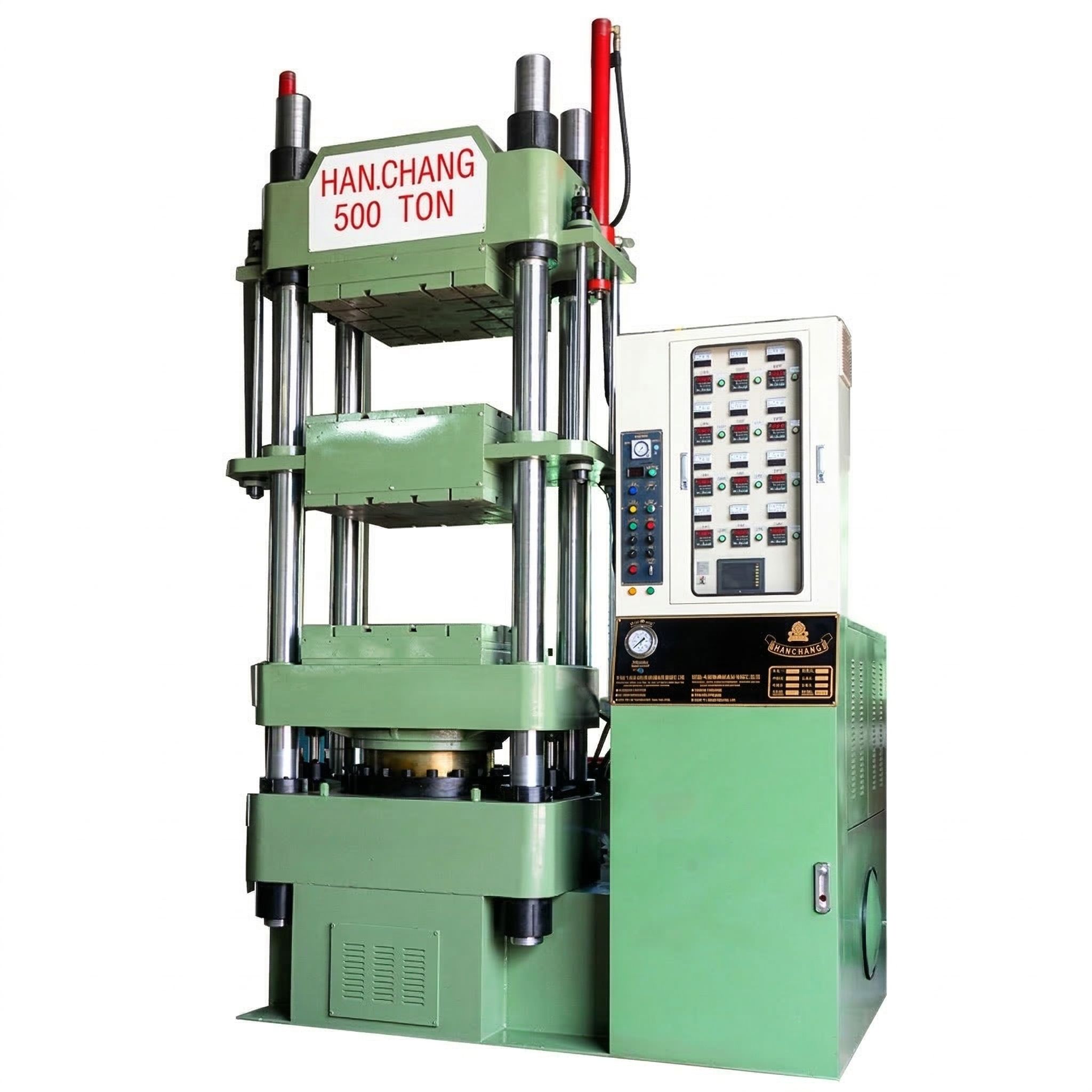
Machine advantages
This hydraulic compression press processes urea-formaldehyde (UF) molding compound, also known as urea molding compound (UMC), into complete toilet seat sets—seat rings and lids—as well as washbasins and other thermoset sanitary parts. For toilet seat cover making, the vertically arranged molds increase output per unit of floor space.
Put factory floor space to work
The vertical layout accommodates two mold sets in one machine, with one operator controlling both. For toilet seat manufacturers planning how to use their production space, the double-layer press offers higher output per unit of floor space through a two-mold configuration.
Coordinate both molds through the molding stages
Pressing, degassing and pressure holding take place simultaneously on the upper and lower levels. The press brings two UF/UMC molding jobs into a synchronized process within one machine.
Plan a flexible product mix
The two levels can carry molds for different products, giving manufacturers more choice in how they use the two mold positions. Both molds must have the same thickness and suit the press workspace and synchronized molding conditions.
Recall settings for repeat production
A Mitsubishi PLC, Fuji Electric touchscreen, and recipe and parameter memory are standard. Operators can save production settings and recall them when returning to a product, keeping commonly used settings accessible at the machine.
Synchronized two-mold compression
See the Han Chang double-layer UF toilet seat molding machine in operation.
Official Han Chang video · Watch on YouTube
Matched upper and lower tooling
Each working level carries one mold set. Equal mold thickness suits the double-layer arrangement, while the product assigned to each mold can differ.
Simultaneous pressing
The upper and lower molds press at the same time, shaping UF/UMC molding compound into the required sanitary components.
Synchronized degassing
Both working levels carry out degassing together, keeping this stage coordinated across the two mold sets.
Hydraulic pressure holding
Both molds hold hydraulic pressure simultaneously under the molding conditions required by the compound and products. Coordinated pressing, degassing and pressure holding define the double-layer molding process.
Materials and sanitary applications
Complete toilet seat sets
Compression-mold UF/UMC seat rings and lids for complete toilet seat sets. The two working levels can carry tools for the same product or different parts, such as a ring and lid, so manufacturers can organize two molding jobs around their order mix. This is useful for coordinating set components and repeat batches while increasing output per unit of floor space. Both mold sets must have equal thickness, and the products and compound must suit synchronized pressing, degassing and pressure holding.
Washbasins and thermoset sanitary parts
Produce UF/UMC washbasins and other thermoset sanitary components with the corresponding molds, extending a factory’s product range within the same material family. Two molding jobs can share the double-layer press, while recipe and parameter memory makes established settings available when a familiar item returns to production. Match both tools’ thickness, basin depth and removal clearance to the working space so the two-mold arrangement fits the parts and the way they are handled.
Two-mold factory layouts
For factories planning two mold sets within a single press, the upper and lower working levels combine production tasks without placing the molds in separate machines. One-operator control supports this compact production arrangement.
Specifications and press selection
Current double-layer models are HCB-300D, HCB-400D, HCB-500D and HCB-600D. Compare clamping force, platen dimensions, daylight, stroke, heater capacity and overall machine dimensions to select a press around both mold sets.
Spec / Type HCB-300D
| Clamping force (Ton) | 300 |
|---|---|
| Plate size (m/m) | 720×720 900×860 |
| Cylinder diameter (m/m) | 450 |
| Stroke (m/m) | 560 |
| Daylight (m/m) | 800 |
| Pump pressure (kg/cm2) | 210 |
| Motor (HP) | 15 |
| Heater capacity (Kw) | 20 |
| Oil reservoir capacity (gallon) | 200 |
| Machine size LxWxH (m/m) | 2480x1490x2945 |
| Net weight approx (kg) | 9000 10200 |
Spec / Type HCB-400D
| Clamping force (Ton) | 400 |
|---|---|
| Plate size (m/m) | 660×620 720×720 900×860 |
| Cylinder diameter (m/m) | 500 |
| Stroke (m/m) | 560 |
| Daylight (m/m) | 800 |
| Pump pressure (kg/cm2) | 210 |
| Motor (HP) | 15 |
| Heater capacity (Kw) | 27 |
| Oil reservoir capacity (gallon) | 250 |
| Machine size LxWxH (m/m) | 2580x1500x3800 |
| Net weight approx (kg) | 9000 10200 11800 |
Spec / Type HCB-500D
| Clamping force (Ton) | 500 |
|---|---|
| Plate size (m/m) | 800×800 900×900 |
| Cylinder diameter (m/m) | 560 |
| Stroke (m/m) | 580 |
| Daylight (m/m) | 800 |
| Pump pressure (kg/cm2) | 210 |
| Motor (HP) | 15 |
| Heater capacity (Kw) | 30 |
| Oil reservoir capacity (gallon) | 250 |
| Machine size LxWxH (m/m) | 2810x1705x3135 |
| Net weight approx (kg) | 13500 15500 |
Spec / Type HCB-600D
| Clamping force (Ton) | 600 |
|---|---|
| Plate size (m/m) | 900×900 1200×1000 |
| Cylinder diameter (m/m) | 620 |
| Stroke (m/m) | 580 |
| Daylight (m/m) | 800 |
| Pump pressure (kg/cm2) | 210 |
| Motor (HP) | 20 |
| Heater capacity (Kw) | 35 |
| Oil reservoir capacity (gallon) | 250 |
| Machine size LxWxH (m/m) | 2810x1705x3135 |
| Net weight approx (kg) | 16000 18700 |
You do not need to choose the tonnage before contacting us. Start with a product photo or drawing; if tooling already exists, add the dimensions, thickness and cavity details of both molds. Han Chang can help match the press configuration to the products, compound and factory conditions. The machine price depends on the selected model, heating configuration and options such as IoT.
Standard equipment and technical support
The press includes a Mitsubishi PLC, Fuji Electric touchscreen, recipe and parameter memory, and core pulling as standard. These provide the control, stored-setting and tooling functions included in the machine configuration.
A safety light curtain, CE compliance and Japanese-brand oil seals are standard. IoT is available as an option.
Send fault videos, control-screen images, alarm messages and movements from both levels through the website’s existing messaging channels. Han Chang technicians help diagnose the issue and guide inspections and adjustments for problems that can be resolved remotely.
Buyer questions
What does double-layer mean on a urea toilet seat molding machine?
There are two working levels, each carrying one mold set. Both tools press, degas and hold pressure simultaneously within the same machine. One operator controls the two molds, combining two UF sanitary-product molding jobs within a single machine footprint for coordinated set or batch production.
Why choose a double-layer press instead of a single-layer machine?
A single-layer machine has one working level and one mold set. A double-layer press provides two working levels and two mold sets controlled by one operator. This arrangement increases output per unit of floor space and suits factories that want to organize two molding jobs within one press.
Can the two molds produce different parts?
Yes. The upper and lower levels can carry molds for different products, provided both molds have the same thickness. Because pressing, degassing and pressure holding are synchronized, the products and compounds must suit that molding arrangement. Mold dimensions, mounting and removal clearance also form part of the configuration.
Does the press make both toilet seat rings and lids?
Yes. The machine processes UF/UMC urea-formaldehyde molding compound into seat rings and lids for complete toilet seat sets, not just covers. Its applications also include washbasins and other thermoset sanitary parts, each formed with the appropriate tooling.
Which controls, tooling and safety features are standard?
Standard equipment includes a Mitsubishi PLC, Fuji Electric touchscreen, recipe and parameter memory, core pulling, a safety light curtain, CE compliance and Japanese-brand oil seals. Remote technical support is also standard. IoT is optional.
How should I select clamping force, platen size and daylight?
Consider the compound’s required molding pressure, projected part area and cavity layout together with the dimensions and thickness of both molds. The platen must accommodate the tooling, while daylight and stroke must suit the molds and part-removal space. Share your product drawings and any existing mold data so Han Chang can help select a suitable model.
How is remote technical support provided?
Use the website’s existing messaging channels to share fault videos, control-screen images, alarm messages and motion details from both working levels. Han Chang technicians use this information to assist diagnosis and guide checks and adjustments for issues that can be handled remotely.
How do I request a quotation for a double-layer toilet seat press?
Start with a product photo or drawing, the compound you plan to use and your target output. If molds already exist, include their dimensions, thickness and cavity details. Model selection, heating configuration, factory voltage, loading and unloading arrangements, and optional IoT help define the machine specification and quotation.
Plan your two-mold toilet seat production
Han Chang manufactures toilet seat molding machines and provides toilet seat production-line services. Send us a photo or drawing of the toilet seat or sanitary part you want to make. If you already have two mold sets, share their details too. We can help select a double-layer press, define its configuration and equipment supply scope, and prepare a quotation.
Series videos and further reading
- Compare single- and double-layer toilet seat molding machines
- Plan a toilet seat cover production line
- Review temperature, pressure, holding and demolding conditions
Urea toilet seat compression molding