
Roller-Electrode High-Frequency Preheater
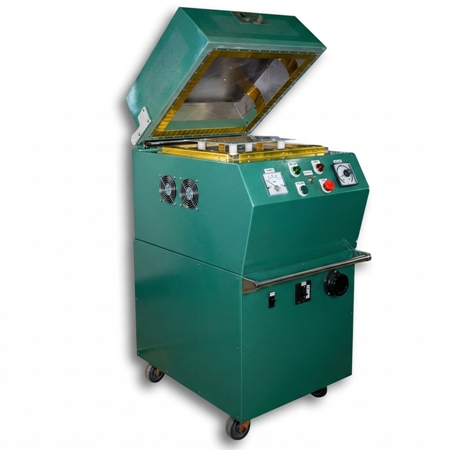
Prepare a better molding charge before it reaches the press
Rotating preforms, improved heat distribution
Twin rollers turn the cylindrical charge while RF dielectric heating generates heat within the material. This arrangement suits regularly shaped molding preforms and helps distribute heating as the charge rotates.
Better flow for consistent molding quality
Preheating softens the compound before it enters the mold, helping it flow and fill the cavity more readily. This supports consistent quality in electronic and electrical molding operations.
Less in-mold heating, better production efficiency
Moving part of the heating stage outside the mold reduces the heating work left for the molding machine. Preheated charges help connect material preparation with the compression or transfer molding cycle.
Timed heating with automatic lid operation
The lid opens and closes automatically, removing the need for manual lifting. At the end of the selected heating time, RF heating stops and the lid opens for the operator to unload the charge.
From cylindrical preform to molding charge
Start with cylindrical preforms prepared for your molding charge. Preheat each batch, then transfer it promptly to the compression mold or transfer pot to keep material preparation aligned with the molding cycle.
The video shows the flat-platform preheater for reference to the shared cabinet and lid operation. The roller-electrode version uses twin rollers in the heating area.
Prepare the preforms and preheat
Prepare cylindrical tablets made in an upstream cold-preforming operation, or use preforms supplied ready-made. Match the charge weight to the subsequent molding shot.
The operator places the preforms in the twin-roller heating area and sets the batch heating time. The lid closes automatically.
Heating stops, then transfer to molding
The preforms rotate on the rollers during RF heating. When the selected time expires, heating stops and the lid opens automatically.
The operator removes the heated preforms and transfers them to the compression mold or transfer molding pot. The downstream machine fills the mold, applies pressure and cures the part.
Time each batch for the next molding charge so heated preforms reach the mold or transfer pot promptly, reducing waiting between operations.
Electronic, electrical, motor and automotive molding applications
Electronic encapsulation
Cylindrical epoxy molding compound (EMC) preforms can be preheated ahead of transfer molding for IC, transistor and discrete electronic component encapsulation. Preheating helps prepare the compound to flow into the package cavity.
Electrical switches and insulation
Phenolic molding compound, also known as Bakelite, is used for switch bodies, connector housings and electrical insulating parts. Roller preheating fits compression or transfer molding lines that use cylindrical preforms.
Motor commutator components
The resin-insulating portion of a motor commutator is an established high-frequency preheating application. Phenolic preforms are heated before loading into the mold for the subsequent molding stage.
Automotive phenolic parts
RF preheating also serves automotive component molding, including phenolic brake pistons and electrical insulators. Where the process uses cylindrical preforms, roller-electrode preheating can be placed ahead of the existing thermoset molding equipment.
Power options for your molding line
Choose from 3, 5, 7, 10 and 25 kW power options. Selection considers preform weight, dimensions and quantity per batch, together with the charge requirements of the downstream molding cycle.
Start with your compound and preform
The focus is RF-preheatable phenolic (PF) and epoxy molding compounds supplied as cylindrical preforms that rotate steadily on the rollers. Compound grade, fillers and curing behavior must suit the preheating conditions. Send an existing preform photo, dimensions or material data to Han Chang; we can help match the configuration to your charge size and molding process.
Five separate power options are shown below. Selection follows preform dimensions, batch weight and the molding schedule.
| Performance / Model | 3 kW preheating model | 5 kW preheating model | 7 kW preheating model | 10 kW preheating model |
| Performance / Model | 25 kW preheating model |
Connect preform heating with your molding process
Han Chang can match the preheater to the charge format and downstream compression or transfer molding process. Whether adding a preheater to an existing line or selecting new equipment, the discussion starts with your material and loading routine.
Existing line: add preform preheating
Locate the machine for convenient unloading and transfer to the mold or transfer pot. Align the arrangement with the existing charging requirements to reduce unnecessary movement and waiting.
New equipment: select around the compound
Share the molding compound, preform dimensions and intended parts. Han Chang can discuss roller-electrode preheating alongside suitable molding equipment, connecting material preparation with the downstream process.
Factory-backed customer service and repair support
Han Chang has factories in Taiwan and mainland China. The mainland factory has dedicated customer service and professional repair departments to support equipment operation and maintenance needs.
Roller-electrode HF preheater FAQs
What does a roller-electrode high-frequency preheater do?
It uses twin roller electrodes to preheat cylindrical thermoset molding preforms before compression or transfer molding. The heated compound flows more readily into the mold. Principal application areas include electronic encapsulation, electrical insulation and motor components.
Which industries use it beyond electronics?
Application areas include electrical switch and connector manufacturing, motor commutator molding, and automotive phenolic components such as brake pistons and electrical insulators. The relevant production route uses cylindrical preforms that are heated before compression or transfer molding.
Should I choose roller or flat electrodes?
Start with the shape of the molding charge. Roller electrodes suit regular cylindrical preforms that rotate during heating. Flat electrodes are generally better suited to powder, granules and irregular charges. If your current process heats loose powder in a cup, match the electrode arrangement to that material-handling method.
Does the preheater make the cylindrical tablets?
The tablets are prepared before heating, in an upstream cold-preforming operation or by the material supplier. The roller-electrode preheater heats and softens this measured charge. The downstream molding machine then shapes and cures the finished part.
Do roller electrodes require the compound to be loaded in a container?
In a typical roller-electrode process, an already formed cylindrical preform is placed in the roller heating area and rotates with the rollers. This differs from cup-loaded powder heating on flat electrodes. The loading arrangement can be matched to the actual preform.
How are loading, heating and lid operation handled?
Loading and removal of the heated preforms are manual. Lid opening and closing are automatic. Heating runs for the selected time, then stops as the lid opens automatically so the operator can transfer the charge to the molding machine.
How do I select the power and request a quotation?
Han Chang offers 3, 5, 7, 10 and 25 kW power options. Start by sending a product or preform photo, the compound name and details of the existing molding equipment. Available batch weights, preform dimensions and production targets help us recommend a suitable configuration and prepare a quotation.
Match roller-electrode preheating to your molding process
Planning electronic encapsulation, electrical insulation or phenolic component production? Send Han Chang your product photos, preform information or existing molding-machine details to discuss the right preheating power, equipment configuration and quotation.