
Brake Pad Hot Press Molding Machine | Guarded Type
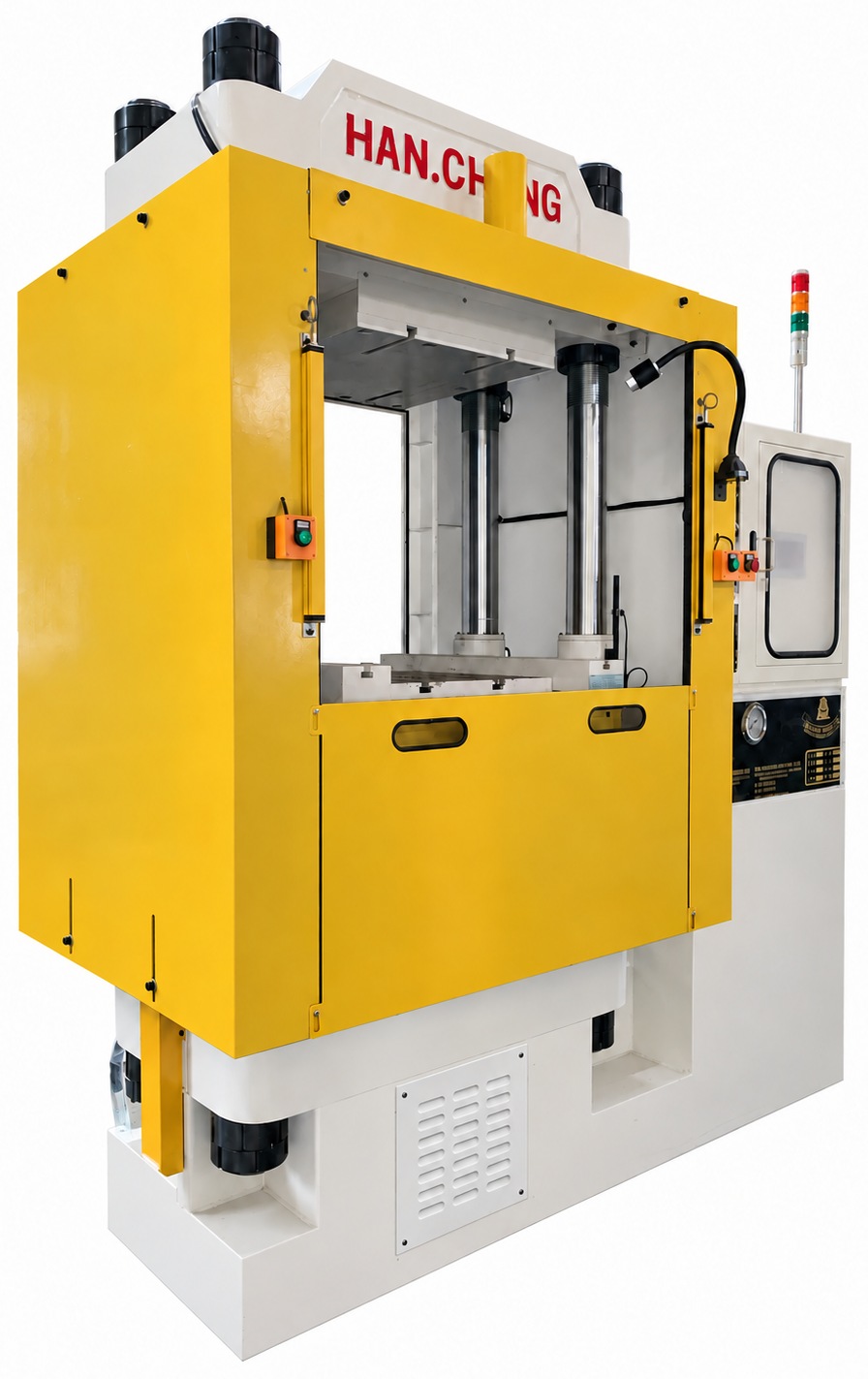
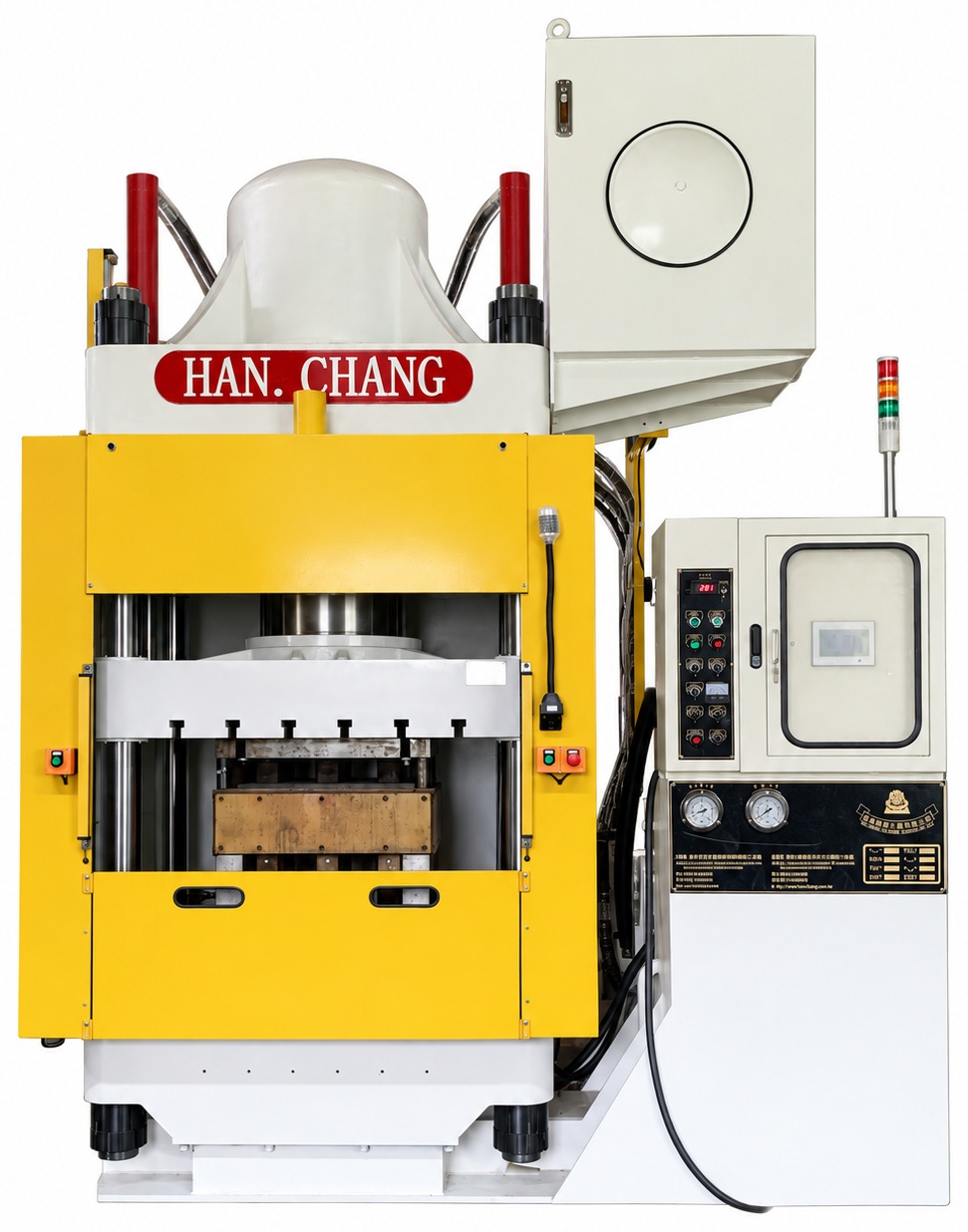
Han Chang’s guarded brake pad hot press combines friction-material molding with sheet-metal panels on the left, right and rear of the hot zone. Upright and inverted configurations are available, both retaining front access for manual loading, unloading and mold cleaning. With matched tooling, the presses hot-cure phenolic-bonded compounds for brake pads, drum linings and friction components.
Machine advantages
Choose a guarded configuration when your factory needs better separation around the hot work area, lower airflow-related heat loss and easier housekeeping. The two machine photographs show upright and inverted layouts, making their enclosure arrangements and front working spaces easy to compare. The defining feature is the three-sided sheet-metal guarding, rather than a single pressing direction.
Shield the hot platens from side and rear access
The panels form a physical barrier between the heated pressing area and surrounding walkways, reducing opportunities for accidental contact from either side or the rear. A clearly defined front working face makes the station easier to organize and helps reduce burn risk around the machine.
Retain heat and support stable molding conditions
Side and rear panels reduce workshop airflow through the hot zone, limiting convective heat loss and the reheating demand on the platens. This helps save heating energy and reduces external airflow disturbances around the mold, supporting a more stable thermal environment during friction-material curing.
Limit sideways dust scatter and simplify housekeeping
During pressing and venting, the panels intercept friction-material dust that would otherwise scatter directly toward the sides and rear. Less spread around the machine helps reduce deposits in awkward cleaning areas, making workstation housekeeping easier to manage around the front operating face.
Keep the front working area accessible
Both layouts retain front access for charge loading, part removal and mold cleaning, while the sheet-metal panels guard the sides and rear. The inverted configuration also retains its stationary lower platen as a fixed tooling reference. Its hydraulic-drive arrangement addresses oil-drip risks around hot platens, helping reduce smoke and mold contamination.
Present a tidy, integrated production station
Sheet-metal cladding gives the machine a clean, integrated appearance and a distinct boundary around the pressing area. For brake-pad factories that value orderly production floors and consistent equipment presentation, the guarded layout combines useful shielding with a neater workstation.
Brake pad hot pressing process
Prepare tooling and load from the front
Arrange tooling and loading positions to suit the selected upright or inverted press. Operators prepare friction compound from the front and place steel backing plates where required by the disc-pad design; drum linings use the corresponding mold.
Apply heat and hydraulic pressure
The hydraulic mechanism closes and loads the mold according to the selected press layout, while the platens supply heat. Venting follows the compound and tooling requirements. Side and rear panels maintain separation around the hot zone and limit direct airflow and dust scatter in those directions.
Hold for friction-material curing
Match temperature, molding pressure and holding time to the resin system, product thickness and mold heat transfer. For steel-backed pads, surface preparation and the bonding system work together with the hot-molding cycle to support consistent quality.
Open, unload and prepare the next cycle
After hot pressing, open the mold and remove parts through the front working area. Clean the tooling and prepare the next charge. A clear handling direction helps organize repetitive work, combining practical guarding with efficient daily operation.
Materials and production applications
Disc brake pads with steel backing plates
The hydraulic hot-molding process forms the friction layer from a suitable compound and steel backing-plate assembly inside the mold. Select the upright or inverted layout around tooling and workstation needs. Three-sided panels provide separation around the hot zone, making either guarded configuration a practical option for factories improving molding operations and workplace protection.
Drum brake linings and friction moldings
Matched molds establish the curvature, length and thickness of drum brake linings while the phenolic binder cures under heat and pressure. Front access supports charge loading, demolding and cleaning, with the surrounding panels helping reduce airflow disturbance. Suitable ceramic, semi-metallic and non-asbestos organic friction formulations can be processed with conditions matched to their hot-curing requirements.
100–800 ton specifications and selection
The table below retains the confirmed HCBR reference specifications for the inverted configuration, from 100 to 800 tons. Upright press force, platen size, daylight and stroke are selected for the chosen machine. Three-sided guarding is arranged around tooling, handling and maintenance access.
Spec / Type HCBR-100
| Clamping force (Ton) | 100 |
|---|---|
| Plate size (m/m) | 540×605 |
| Cylinder diameter (m/m) | 265 |
| Stroke (m/m) | 460 |
| Daylight (m/m) | 690 |
| Pump pressure (kg/cm2) | 210 |
| Motor (HP) | 5 |
| Heater capacity (Kw) | 10.6 |
| Oil reservoir capacity (gallon) | 100 |
| Machine size LxWxH (m/m) | 1940x1200x2370 |
| Net weight approx (kg) | 3700 |
Spec / Type HCBR-150
| Clamping force (Ton) | 150 |
|---|---|
| Plate size (m/m) | 660×620 |
| Cylinder diameter (m/m) | 300/315 |
| Stroke (m/m) | 480 |
| Daylight (m/m) | 700 |
| Pump pressure (kg/cm2) | 210 |
| Motor (HP) | 7.5 |
| Heater capacity (Kw) | 10.6 |
| Oil reservoir capacity (gallon) | 100 |
| Machine size LxWxH (m/m) | 2030x1350x2370 |
| Net weight approx (kg) | 4000 |
Spec / Type HCBR-200
| Clamping force (Ton) | 200 |
|---|---|
| Plate size (m/m) | 660×620
720×720 |
| Cylinder diameter (m/m) | 368 |
| Stroke (m/m) | 500 |
| Daylight (m/m) | 820 |
| Pump pressure (kg/cm2) | 210 |
| Motor (HP) | 10 |
| Heater capacity (Kw) | 15.2 |
| Oil reservoir capacity (gallon) | 120 |
| Machine size LxWxH (m/m) | 2300x1350x2670 |
| Net weight approx (kg) | 4500
6000 |
Spec / Type HCBR-250
| Clamping force (Ton) | 250 |
|---|---|
| Plate size (m/m) | 720×720 |
| Cylinder diameter (m/m) | 400 |
| Stroke (m/m) | 520 |
| Daylight (m/m) | 810 |
| Pump pressure (kg/cm2) | 210 |
| Motor (HP) | 10 |
| Heater capacity (Kw) | 18.8 |
| Oil reservoir capacity (gallon) | 150 |
| Machine size LxWxH (m/m) | 2410x1350x2780 |
| Net weight approx (kg) | 6800 |
Spec / Type HCBR-300
| Clamping force (Ton) | 300 |
|---|---|
| Plate size (m/m) | 630×630
720×720 900×860 |
| Cylinder diameter (m/m) | 450 |
| Stroke (m/m) | 560 |
| Daylight (m/m) | 810 |
| Pump pressure (kg/cm2) | 210 |
| Motor (HP) | 15 |
| Heater capacity (Kw) | 20 |
| Oil reservoir capacity (gallon) | 200 |
| Machine size LxWxH (m/m) | 2480x1490x2945 |
| Net weight approx (kg) | 6500
7500 9500 |
Spec / Type HCBR-400
| Clamping force (Ton) | 400 |
|---|---|
| Plate size (m/m) | 630×630 |
| Cylinder diameter (m/m) | 500 |
| Stroke (m/m) | 560 |
| Daylight (m/m) | 950 |
| Pump pressure (kg/cm2) | 210 |
| Motor (HP) | 15 |
| Heater capacity (Kw) | 27 |
| Oil reservoir capacity (gallon) | 250 |
| Machine size LxWxH (m/m) | 2580x1500x3800 |
| Net weight approx (kg) | 6800
8000 10000 |
Spec / Type HCBR-500
| Clamping force (Ton) | 500 |
|---|---|
| Plate size (m/m) | 800×800
900×900 |
| Cylinder diameter (m/m) | 560 |
| Stroke (m/m) | 580 |
| Daylight (m/m) | 1000 |
| Pump pressure (kg/cm2) | 210 |
| Motor (HP) | 15 |
| Heater capacity (Kw) | 30 |
| Oil reservoir capacity (gallon) | 250 |
| Machine size LxWxH (m/m) | 2810x1705x3135 |
| Net weight approx (kg) | 10000
13500 |
Spec / Type HCBR-600
| Clamping force (Ton) | 600 |
|---|---|
| Plate size (m/m) | 1000×1000 |
| Cylinder diameter (m/m) | 620 |
| Stroke (m/m) | 610 |
| Daylight (m/m) | 1020 |
| Pump pressure (kg/cm2) | 210 |
| Motor (HP) | 20 |
| Heater capacity (Kw) | 30 |
| Oil reservoir capacity (gallon) | 300 |
| Machine size LxWxH (m/m) | 3000x1750x4100 |
| Net weight approx (kg) | 14000
16500 |
Spec / Type HCBR-800
| Clamping force (Ton) | 800 |
|---|---|
| Plate size (m/m) | 1800×1400 |
| Cylinder diameter (m/m) | 700 |
| Stroke (m/m) | 700 |
| Daylight (m/m) | 1060 |
| Pump pressure (kg/cm2) | 210 |
| Motor (HP) | 30 |
| Heater capacity (Kw) | 40 |
| Oil reservoir capacity (gallon) | 355 |
| Machine size LxWxH (m/m) | 3220x1850x4350 |
| Net weight approx (kg) | 26000 |
The original model values remain unchanged for inverted-press comparison. For an upright configuration, send product or existing-tool information so Han Chang can recommend the relevant machine specifications and sheet-metal guarding arrangement.
Selection and service support
Select the press layout and guarding together
Start with product drawings, mold photographs or a view of your current workstation. Han Chang can compare upright and inverted configurations and discuss front loading, part collection, mold changes and maintenance access so the guarded press fits your production arrangement.
Compare quotations on a clear equipment scope
Compare the press, tooling interfaces, heating, controls, three-sided panels and front operating arrangement on the same basis. Front-opening safeguards and any local extraction or dust collection are addressed to suit the material and workplace; the panels are not a substitute for extraction equipment.
Buyer questions
Is the guarded brake pad press only available in an inverted layout?
No. Upright and inverted configurations are available with sheet-metal guarding, and the two photographs show these distinct layouts. Both use panels on the left, right and rear while keeping the front open for operation. The pressing arrangement follows the selected machine configuration.
How do the panels help with heat retention and energy use?
The panels reduce direct side and rear airflow through the hot pressing zone, limiting convective losses and platen reheating demand. This also helps stabilize the mold’s thermal environment. Actual energy use and temperature distribution depend on the mold, temperature setting, opening time and workshop airflow.
How are loading, unloading and mold cleaning handled?
Operators load material, place backing plates, remove parts and clean molds through the front opening. Handling is arranged around the tooling position and opening movement of the selected upright or inverted press. Mold dimensions, clearance and the removal path are considered together.
Which brake products and compounds can be hot molded?
The press is intended for phenolic-bonded friction compounds suitable for hot curing, using matched molds for disc brake pads, drum brake linings and friction components. Suitable ceramic, semi-metallic and non-asbestos organic formulations require temperature, pressure, venting and holding time matched to the compound and tool.
How should a buyer select force, platen size and daylight?
Required force depends on the compound’s molding pressure, the total projected area under pressure and the cavity arrangement. Platen size must accommodate the tool and its supports, while daylight and stroke must suit mold height and part-removal clearance. Product and mold information gives Han Chang a practical starting point for HCBR selection.
What information is needed for a machine quotation?
Send the brake-product drawing or photographs, material and approximate production target. If tooling or equipment already exists, include its dimensions, cavity count and workplace photographs. Han Chang can then discuss the hot press, three-sided guarding, front handling arrangement and equipment quotation.
Add practical guarding to your brake-pad hot-press station
Send Han Chang your brake-pad drawings, mold photographs or current workstation layout. Compare upright and inverted guarded configurations, select suitable force, tooling space and front access, and obtain an equipment quotation for your production needs.