
Single-Station Vacuum Compression Molding Machine
Han Chang manufactures single-station vacuum compression molding machines for rubber and silicone seals, gaskets and keypads. After the mold and hood close, vacuum evacuation starts together with pressing and venting.
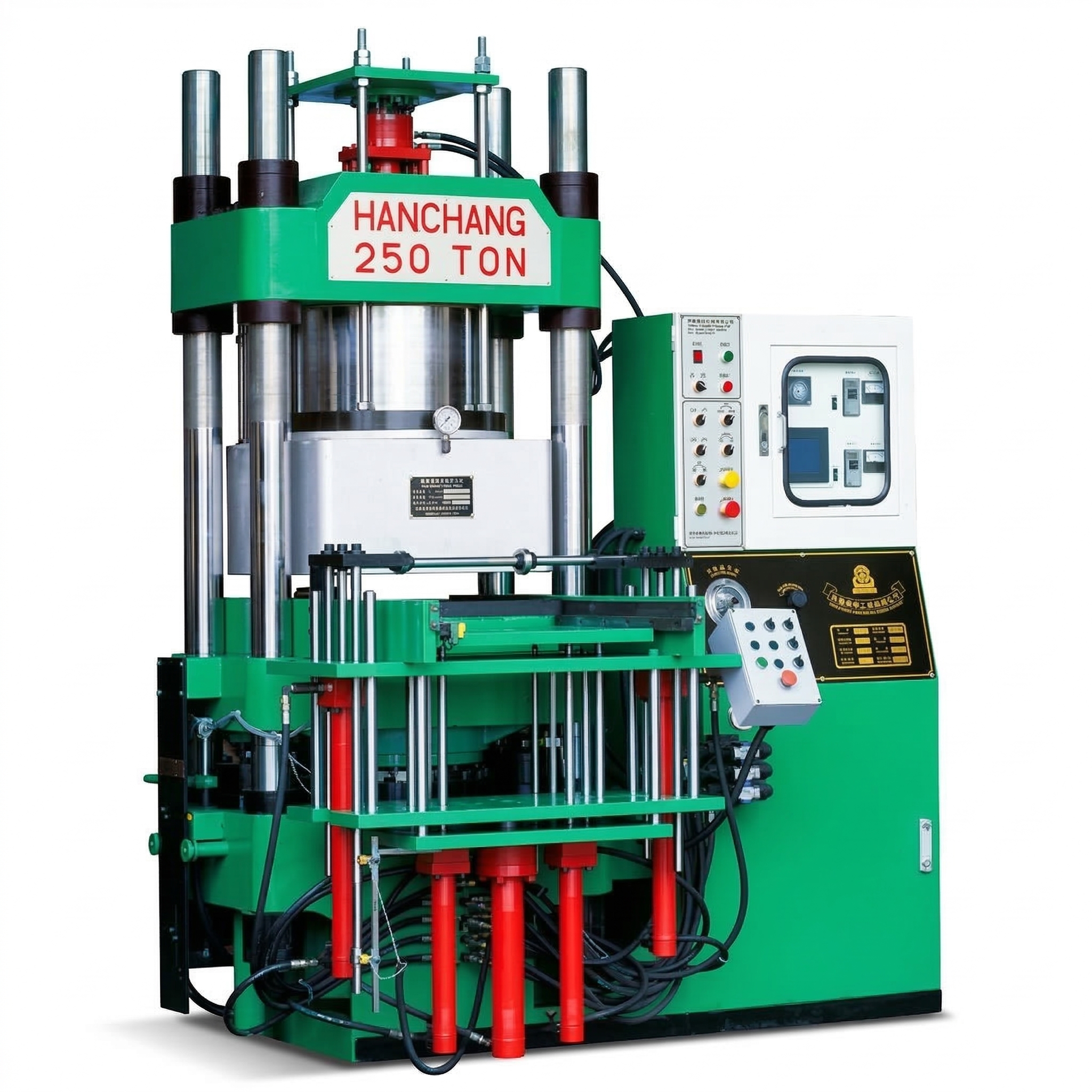
Machine advantages
Carry released gases away from the tool
Vacuum evacuation draws away gases released during pressing and mold venting. This helps reduce the effect of trapped gas on sealing surfaces and part appearance.
One station for a defined molding operation
Choose this single-station vacuum compression moulding machine to organize loading, pressing and part removal around one tool. Match each batch to its rubber or silicone compound, molding conditions and tooling, keeping the production task focused on one clearly defined molding station.
Apply heat and force for compound curing
Heated platens transfer heat into the tool while the hydraulic system applies molding force. Temperature, pressure and curing time are matched to the rubber or silicone formulation.
Size the press around the complete mold
The 80–350 ton range provides different force and platen specifications. Consider the full mold footprint, cavity layout, mold thickness and removal clearance—not just the size of one finished part.
Vacuum compression molding and degassing
Open and load the mold
Place rubber or silicone compound into the open mold.
Close the mold, then the hood
Close the mold first, followed by the vacuum hood.
Evacuate while pressing and venting
Vacuum evacuation begins together with pressing and venting. Released gases are drawn away while heated platens provide the heat needed for molding and curing.
Open and remove the product
After molding, open the mold and vacuum hood and remove the finished product.
Rubber and silicone applications
Han Chang single-station vacuum compression presses mold industrial rubber parts, silicone keypad components and consumer goods. One station combines loading, pressing and removal with vacuum-assisted mold venting. With suitable compounds and tooling, the same vacuum molding station serves batches of sealing, protective, cushioning and consumer-product components.
O-rings, flange gaskets and equipment seals
Molded products include O-rings, flat sealing washers, flange gaskets, pump-cover seals and valve sealing pads. NBR is a common starting point for oil-resistant seals; EPDM is often considered for outdoor sealing applications.
A single mold can organize seal production around one station. Vacuum assistance supports venting around ring sections and sealing edges.
Silicone keypads and electronic enclosure seals
Solid-silicone products include remote-control keypads, industrial control-panel keymats, button dust membranes, connector seals and enclosure gaskets. Compound hardness helps define key feel, elastic return and sealing behavior.
Keypad mats, button boots and electronic sealing membranes benefit from venting around thin webs and raised buttons. Electrical contacts and printing are separate keypad process stages.
Cable grommets, wiring boots and protective caps
Examples include panel grommets, wiring-harness boots, connector dust caps, rubber plugs and mechanism covers. These parts protect cables at panel openings and shield exposed connections or moving assemblies.
Grommet holes, grooves and thin sealing edges need effective mold venting. The single-station layout combines vacuum assistance with one loading and removal position.
Machine feet, rubber bumpers and vibration pads
Produce equipment feet, appliance anti-slip pads, impact bumpers, cushioning washers and resilient pads. Natural-rubber and SBR compounds are common choices where elasticity and wear performance guide material selection.
Hardness and geometry determine the support or cushioning function. Mold cavity count guides material placement and part collection at the single press station.
Suction cups, flexible diaphragms and bellows
Matched tooling can produce handling suction cups, pump or valve diaphragms, rubber bellows and silicone protective boots. Cup lips provide contact, diaphragms flex during operation, and bellows protect assemblies while allowing movement.
Suction-cup lips and diaphragms need suitable curved-surface venting and release paths. The single station retains the vacuum process for production organized around one mold.
Silicone coasters, baking molds and wearable parts
Consumer-product examples include silicone coasters, heat-resistant mats, baking molds, soft grips and wristbands. Tool surfaces create the required contours and textures; compound, color and hardness determine the intended feel and use.
Coasters, heat-resistant mats and baking molds use tooling matched to the required texture and shape. Food-contact applications require suitable compounds and finished-part compliance testing.
Specifications and machine selection
Seven listed models, HCAV-80D through HCAV-350D, span 80–350 tons. Compare molding force, platen dimensions, stroke, daylight, heater capacity and machine dimensions in the individual tables.
Spec / Type HCAV-80D
| Clamping force (Ton) | 80 |
|---|---|
| Plate size (m/m) | 439×419 |
| Cylinder diameter (m/m) | 236 |
| Stroke (m/m) | 320 |
| Daylight (m/m) | 500 |
| Pump pressure (kg/cm2) | 210 |
| Motor (HP) | 5 |
| Heater capacity (Kw) | 7.6 |
| Oil reservoir capacity (gallon) | 150 |
| Machine size LxWxH (m/m) | 3140x1528x2185 |
| Net weight approx (kg) | 5400 |
Spec / Type HCAV-100D
| Clamping force (Ton) | 100 |
|---|---|
| Plate size (m/m) | 355×355
439×419 555×505 |
| Cylinder diameter (m/m) | 265 |
| Stroke (m/m) | 320 |
| Daylight (m/m) | 500 |
| Pump pressure (kg/cm2) | 210 |
| Motor (HP) | 5 |
| Heater capacity (Kw) | 10.6 |
| Oil reservoir capacity (gallon) | 150 |
| Machine size LxWxH (m/m) | 3380x1793x2370 |
| Net weight approx (kg) | 7600 |
Spec / Type HCAV-150D
| Clamping force (Ton) | 150 |
|---|---|
| Plate size (m/m) | 439×419
555×505 614×574 |
| Cylinder diameter (m/m) | 300/315 |
| Stroke (m/m) | 320 |
| Daylight (m/m) | 500 |
| Pump pressure (kg/cm2) | 210 |
| Motor (HP) | 7.5 |
| Heater capacity (Kw) | 10.6 |
| Oil reservoir capacity (gallon) | 150 |
| Machine size LxWxH (m/m) | 3750x1880x2370 |
| Net weight approx (kg) | 9000 |
Spec / Type HCAV-200D
| Clamping force (Ton) | 200 |
|---|---|
| Plate size (m/m) | 555×505
614×574 674×674 |
| Cylinder diameter (m/m) | 368 |
| Stroke (m/m) | 320 |
| Daylight (m/m) | 500 |
| Pump pressure (kg/cm2) | 210 |
| Motor (HP) | 7.5 |
| Heater capacity (Kw) | 16.6 |
| Oil reservoir capacity (gallon) | 170 |
| Machine size LxWxH (m/m) | 3750x1860x2760 |
| Net weight approx (kg) | 12000 |
Spec / Type HCAV-250D
| Clamping force (Ton) | 250 |
|---|---|
| Plate size (m/m) | 614×574
674×674 785×710 |
| Cylinder diameter (m/m) | 400 |
| Stroke (m/m) | 320 |
| Daylight (m/m) | 500 |
| Pump pressure (kg/cm2) | 210 |
| Motor (HP) | 7.5 |
| Heater capacity (Kw) | 16.6 |
| Oil reservoir capacity (gallon) | 170 |
| Machine size LxWxH (m/m) | 3750x1860x2760 |
| Net weight approx (kg) | 12500 |
Spec / Type HCAV-300D
| Clamping force (Ton) | 300 |
|---|---|
| Plate size (m/m) | 614×574
630×650 674×674 |
| Cylinder diameter (m/m) | 450 |
| Stroke (m/m) | 320 |
| Daylight (m/m) | 500 |
| Pump pressure (kg/cm2) | 210 |
| Motor (HP) | 7.5 |
| Heater capacity (Kw) | 16.6 |
| Oil reservoir capacity (gallon) | 170 |
| Machine size LxWxH (m/m) | 3750x1965x2760 |
| Net weight approx (kg) | 13000 |
Spec / Type HCAV-350D
| Clamping force (Ton) | 350 |
|---|---|
| Plate size (m/m) | 700×700 |
| Cylinder diameter (m/m) | 460 |
| Stroke (m/m) | 320 |
| Daylight (m/m) | 500 |
| Pump pressure (kg/cm2) | 210 |
| Motor (HP) | 10 |
| Heater capacity (Kw) | 16.6 |
| Oil reservoir capacity (gallon) | 170 |
| Machine size LxWxH (m/m) | 3760x1965x2960 |
| Net weight approx (kg) | 14500 |
Match the mold force requirement and footprint first, then check mold thickness, opening clearance and heating needs. Existing mold drawings help connect model selection to the actual tooling.
Tooling and equipment quotations
Send a photo, drawing or existing mold dimensions. Han Chang can discuss press force, platen size, opening clearance and heater requirements around the tooling and intended production.
A mold-tilting function can be supplied to customer requirements for loading and demolding access. A mold drawing or photo provides a useful starting point for configuration and quotation.
Buyer questions
What products can a single-station vacuum compression molding press make?
With suitable compounds and tooling, Han Chang single-station vacuum compression presses can mold O-rings, gaskets, cable grommets, caps, machine feet, bumpers, silicone keypads, enclosure membranes, suction cups, diaphragms, coasters, heat-resistant mats and baking molds. One station brings loading, vacuum compression molding and part removal together for production organized around one tool, with vacuum evacuation supporting mold venting.
Can this single-station press mold both rubber and silicone?
Yes. The press processes both rubber and silicone. Match the mold and the temperature, pressure and curing time to each compound to organize production around the required parts.
How does it differ from a double-station vacuum press?
The difference is the number of molding stations; the vacuum compression molding motions are the same. Choose this configuration for one molding station. A double-station press provides two independently controlled stations when that arrangement suits production.
Is this a compression or injection molding machine?
It is a compression molding machine. Compound is placed into the open mold before closure and pressing. It does not use a screw or injection unit to inject material into a closed mold.
When does vacuum evacuation begin?
The mold closes first, followed by the vacuum hood. Evacuation then begins together with pressing and venting, drawing away gases released from the mold.
Are mold vents still required?
Yes. Mold vents and parting surfaces provide a path out of the cavities; vacuum evacuation carries the released gas away. Tool venting, compound flow and molding conditions work together.
How should I select tonnage for an existing mold?
Consider cavity count, total projected area, the required molding pressure and mold construction. Then match platen dimensions, mold height, daylight and removal space. Han Chang can discuss the appropriate model from your tooling information.
Can a mold-tilting function be added?
Yes, it can be customized to customer requirements. The arrangement should suit the tool and the access needed for loading and demolding. Include a mold drawing or photo with the inquiry.
What do I need to request a quotation?
Start with a product photo or drawing, the rubber or silicone compound and planned production requirements. If a mold is available, add its dimensions, thickness and cavity count. Han Chang can discuss force, platens, heating and options without requiring you to specify every machine parameter first.
Configure a single-station vacuum press around your tooling
Send your rubber or silicone part drawing, product photo or mold details. Han Chang can discuss force, platen size, heating and optional mold tilting, then quote the corresponding equipment.