
Double-Station Sliding-Plate and Ejection Compression Molding Machine
Han Chang manufactures double-station compression molding machines that combine sliding-plate access with ejection assistance for rubber and silicone parts, bringing tooling within reach and supporting release from the mold.
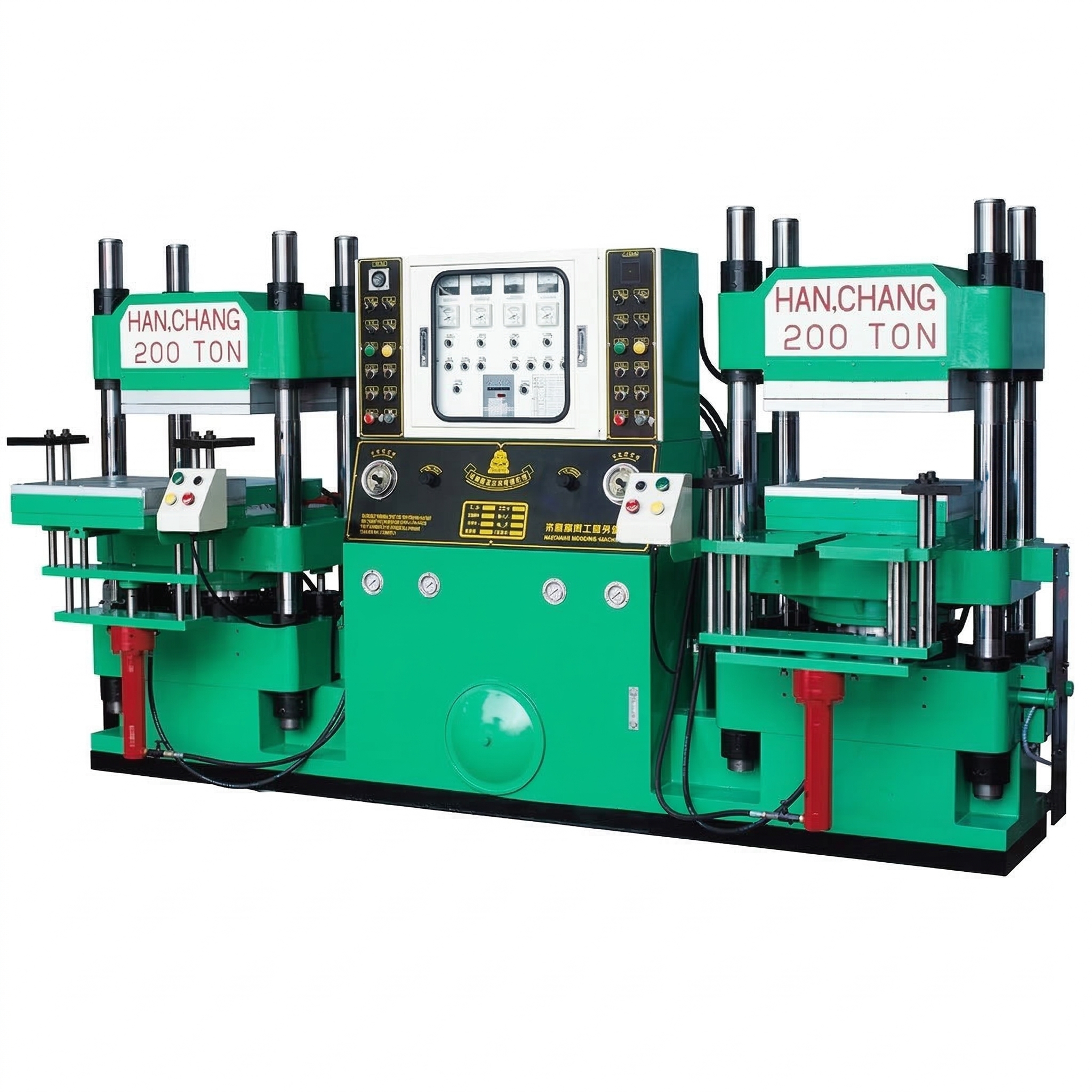
Machine advantages
Part removal deserves as much attention as molding force. For soft, deeper or handling-sensitive parts, sliding movement provides access to the tooling, while a compatible ejection arrangement helps release the part without relying only on manual pulling.
Support release instead of relying on pulling
The ejection mechanism works with compatible tooling to help push parts out of their cavities, reducing the handling burden for soft or deeper molded components.
Bring the mold into the handling area
This sliding-plate compression moulding machine with ejection gives operators access for charge placement, parting-surface cleaning and checking the cavities after part removal.
Consider molding and demolding together
Heated platens, hydraulic molding force and ejection are selected around the compound and tooling, so the press addresses both curing and subsequent part handling.
Plan work around two stations
Two molding positions support production planning around tooling, cure time and operators, rather than selecting equipment by tonnage alone.
Compression molding and mold handling
Prepare the mold and compound
Use the accessible mold position to prepare the surface and place the rubber or silicone charge.
Close and apply molding force
Close the tooling in the pressing position. Heated platens supply heat and the hydraulic system provides compression force.
Maintain the compound’s cure conditions
Hold the molding conditions for the compound and part thickness to complete rubber vulcanization or silicone compression molding.
Open, release and remove the parts
Use the mold opening, sliding and ejection functions as arranged for the tooling, then remove the molded parts.
Rubber and silicone applications
Han Chang double-station compression presses with sliding plates and ejection mold rubber boots, suction cups, diaphragms and seals, plus silicone keypads and consumer goods. Sliding access supports mold handling; ejection works with the tool to assist release of soft, deeper or multi-cavity molded parts.
Cable grommets, protective boots and rubber bellows
Grommets protect cables passing through panels; boots and bellows shield moving components. Lipped plugs and caps close openings or protect exposed parts. Rubber or solid-silicone compounds suit different service requirements.
Bellows, sealing lips and deep holes make release more tooling-dependent. Sliding access and matched ejection, mold splits and cores support demolding of deeper or enclosing shapes.
Suction cups and flexible diaphragms
Matched tooling can produce handling suction cups and flexible diaphragms for pumps or valves. Cup lips provide contact, while diaphragms flex during operation.
Thin suction-cup lips and curved diaphragms need planned release paths. Ejection works with cores and parting surfaces instead of relying solely on pulling flexible edges.
O-rings, flange gaskets and equipment seals
Molded products include O-rings, flat sealing washers, flange gaskets, pump-cover seals and valve sealing pads. NBR is a common starting point for oil-resistant seals; EPDM is often considered for outdoor sealing applications.
Sealing rings, flanged gaskets and cup-shaped seals need suitable release paths. Ejection works with designed mold support points, while sliding access helps operators collect the parts.
Silicone keypads and electronic enclosure seals
Solid-silicone products include remote-control keypads, industrial control-panel keymats, button dust membranes, connector seals and enclosure gaskets. Compound hardness helps define key feel, elastic return and sealing behavior.
Soft keypad webs and sealing lips need suitable support and separation. Ejection works with the mold support surfaces; sliding access assists handling of multi-cavity keypad tooling.
Machine feet, rubber bumpers and vibration pads
Produce equipment feet, appliance anti-slip pads, impact bumpers, cushioning washers and resilient pads. Natural-rubber and SBR compounds are common choices where elasticity and wear performance guide material selection.
Feet and stops with deeper profiles can incorporate ejection into the tooling plan to reduce reliance on hand pulling. Compound hardness serves the support or damping requirement.
Silicone coasters, baking molds and wearable parts
Consumer-product examples include silicone coasters, heat-resistant mats, baking molds, soft grips and wristbands. Tool surfaces create the required contours and textures; compound, color and hardness determine the intended feel and use.
Deeper silicone baking molds, flexible covers and textured consumer products can use ejection matched to their release needs. Food-contact products require suitable compounds and compliance testing.
Specifications and machine selection
The six listed HCVE-50D–200D models cover 50–200 tons. Compare platen dimensions, machine stroke, daylight, heating capacity and overall dimensions in the model tables.
Spec / Type HCVE-50D
| Clamping force (Ton) | 50 |
|---|---|
| Plate size (m/m) | 380×380 |
| Cylinder diameter (m/m) | 190 |
| Stroke (m/m) | 320 |
| Daylight (m/m) | 500 |
| Pump pressure (kg/cm2) | 210 |
| Motor (HP) | 3×2 |
| Heater capacity (Kw) | 5×2 |
| Oil reservoir capacity (gallon) | 100 |
| Machine size LxWxH (m/m) | 2840x1385x1880 |
| Net weight approx (kg) | 2680 |
Spec / Type HCVE-70D
| Clamping force (Ton) | 70 |
|---|---|
| Plate size (m/m) | 420×455 |
| Cylinder diameter (m/m) | 212 |
| Stroke (m/m) | 320 |
| Daylight (m/m) | 500 |
| Pump pressure (kg/cm2) | 210 |
| Motor (HP) | 3×2 |
| Heater capacity (Kw) | 5.5×2 |
| Oil reservoir capacity (gallon) | 135 |
| Machine size LxWxH (m/m) | 2900x1498x1930 |
| Net weight approx (kg) | 3800 |
Spec / Type HCVE-80D
| Clamping force (Ton) | 80 |
|---|---|
| Plate size (m/m) | 485×465 |
| Cylinder diameter (m/m) | 236 |
| Stroke (m/m) | 320 |
| Daylight (m/m) | 500 |
| Pump pressure (kg/cm2) | 210 |
| Motor (HP) | 5×2 |
| Heater capacity (Kw) | 7.6×2 |
| Oil reservoir capacity (gallon) | 150 |
| Machine size LxWxH (m/m) | 3140x1528x2185 |
| Net weight approx (kg) | 5400 |
Spec / Type HCVE-100D
| Clamping force (Ton) | 100 |
|---|---|
| Plate size (m/m) | 400×400
485×465 550×550 |
| Cylinder diameter (m/m) | 265 |
| Stroke (m/m) | 320 |
| Daylight (m/m) | 500 |
| Pump pressure (kg/cm2) | 210 |
| Motor (HP) | 5×2 |
| Heater capacity (Kw) | 10.6×2 |
| Oil reservoir capacity (gallon) | 150 |
| Machine size LxWxH (m/m) | 3380x1793x2370 |
| Net weight approx (kg) | 7600 |
Spec / Type HCVE-150D
| Clamping force (Ton) | 150 |
|---|---|
| Plate size (m/m) | 485×465
550×550 660×620 |
| Cylinder diameter (m/m) | 300/315 |
| Stroke (m/m) | 320 |
| Daylight (m/m) | 500 |
| Pump pressure (kg/cm2) | 210 |
| Motor (HP) | 7.5×2 |
| Heater capacity (Kw) | 10.6×2 |
| Oil reservoir capacity (gallon) | 150 |
| Machine size LxWxH (m/m) | 3750x1888x2370 |
| Net weight approx (kg) | 9000 |
Spec / Type HCVE-200D
| Clamping force (Ton) | 200 |
|---|---|
| Plate size (m/m) | 550×550
660×620 720×720 |
| Cylinder diameter (m/m) | 368 |
| Stroke (m/m) | 320 |
| Daylight (m/m) | 500 |
| Pump pressure (kg/cm2) | 210 |
| Motor (HP) | 7.5×2 |
| Heater capacity (Kw) | 15.2×2 |
| Oil reservoir capacity (gallon) | 200 |
| Machine size LxWxH (m/m) | 4000x2330x2670 |
| Net weight approx (kg) | 13600 |
Include mold weight, part depth and release method alongside molding force. The listed machine stroke is not the ejector stroke; discuss ejection travel and contact points with the tooling details.
Tooling and equipment quotations
A part photo, section drawing or existing mold drawing helps identify where ejection support is needed. Han Chang can then discuss force, platen and opening requirements for a quotation.
A mold-tilting function can be customized to customer requirements. Describe the opening movement separately from sliding access and ejection.
Buyer questions
What products suit a compression press with sliding plates and ejection?
With suitable compounds and tooling, Han Chang sliding-plate compression presses with ejection can mold cable grommets, protective boots, rubber bellows, suction cups, diaphragms, seals, gaskets, machine feet, bumpers, silicone keypads, enclosure membranes, heat-resistant mats and baking molds. Sliding plates improve mold access, while matched ejection assists the release of soft, deeper or multi-cavity parts.
When is ejection assistance worth considering?
Consider it for soft, deeper or handling-sensitive rubber and silicone parts where manual pulling is difficult. The ejection contact points must suit the part and tooling.
Does this machine process rubber and silicone?
Yes. Both can be compression molded with suitable compounds, molds and corresponding cure conditions.
How do sliding plates and ejection differ?
Sliding plates move the mold into the handling area. Ejection works with the mold to help release parts from cavities. For mold access without that release assistance, compare the double-station sliding-plate press.
Is the machine stroke also the ejector stroke?
No. The tables list machine stroke. Ejection travel and contact points are tooling-related selection requirements and should be discussed separately.
What tooling factors matter for releasing deep or undercut parts?
Release depends on mold parting, compound hardness, part geometry and ejection contact points. A section drawing helps establish a suitable tooling and removal arrangement.
Can I use an existing mold?
Send the mold dimensions, weight and ejection structure. Compatibility depends on its interfaces, opening and release arrangement as well as the required platen and force.
Can mold tilting be included?
Yes. A mold-tilting function can be customized to customer requirements and the tooling’s opening method.
What information helps with a quotation?
Start with a part or mold photo, dimensions and compound. Known release difficulties, mold weight and production requirements help define the sliding and ejection configuration.
Specify a press that also supports part removal
Send Han Chang your part or tooling information and describe the compound and release needs. Discuss a double-station compression press with suitable sliding access, ejection and heated platens.