
Double-Layer EVA Foaming Compression Molding Machine
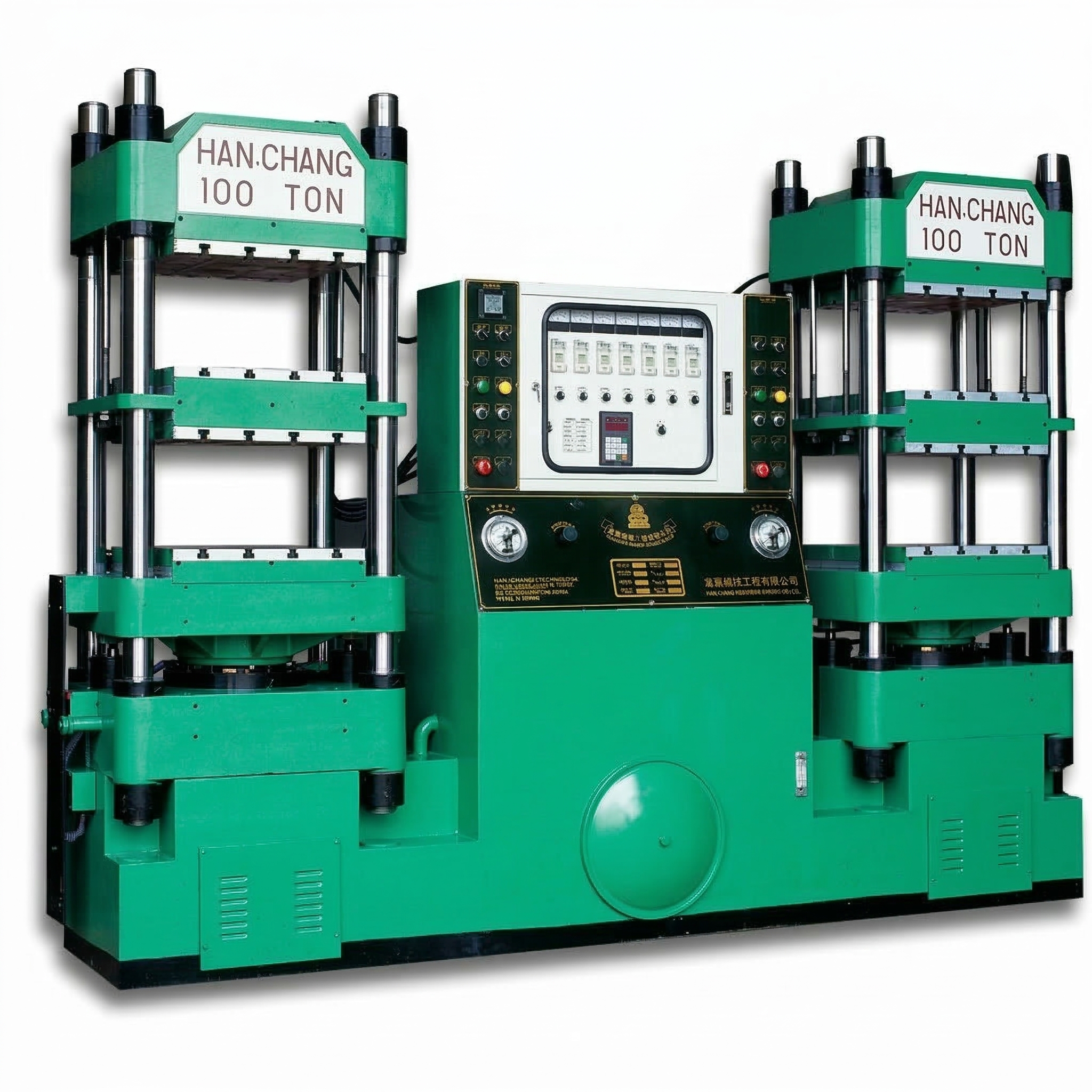
Han Chang’s double-layer EVA foam compression molding machine produces midsoles and foam pads, using heat, holding pressure and rapid-opening expansion. Left and right stations operate independently, each opening two stacked mold sets very rapidly and simultaneously.
Machine advantages
Han Chang combines independent stations, two mold levels per station and very fast synchronized opening for flexible EVA compression foaming production. Prompt release of both stacked mold sets lets the material expand at the required stage; together with suitable heating and holding conditions, this supports consistent molded-part quality.
Rapid opening at both mold levels
Each station opens its mold sets at the upper and lower levels very quickly and at the same time, allowing EVA to expand as the mold restraint is released. This directly addresses a critical double-layer foaming requirement: neither level should lag behind and compromise its molded parts.
Use either station independently
The left and right stations have separate control systems. Run only the left station, only the right station, or both to suit the production schedule, without having to switch on the other side for single-station work.
Two working levels at each station
Use the vertical working space for two complete mold sets at each station, with four positions across the illustrated machine. Operate one station or both to suit the order, then organize batches around the cavities in each tool. This arrangement gives the factory practical flexibility in using its available tooling positions.
Select around the tooling, not tonnage alone
HCH-80D, HCH-100D, HCH-150D and HCH-200D offer different tonnage, platen and opening specifications. Match the press to mold footprint, required molding pressure and space for foam expansion and part removal.
EVA compression foaming process
See the Han Chang double-layer EVA foam compression molding machine in operation.
Official Han Chang video · Click to watch
1. Load the compound manually
The operator places prepared EVA foaming compound into the molds at the station in use, following the product’s tooling and charge requirements.
2. Close, heat and hold pressure
The molds close and the material is processed under heat and holding pressure. Heating and holding time depend on the compound, charge and part requirements.
3. Open both levels rapidly together
The mold sets at the upper and lower levels within the station open very rapidly and simultaneously, releasing the restraint so the material can expand. The left and right stations operate independently; they do not have to open together.
4. Remove the foamed parts manually
The operator removes the parts after opening and expansion, then passes them to the required downstream operations and prepares the next charge.
Materials and production applications
EVA midsoles and footwear components
Produce compression-foamed EVA midsoles and footwear components for the cushioning structure of a shoe sole. The compound is heated under pressure in the mold and expands when the tool opens. Rapid, simultaneous opening of both mold sets within each station supports the expansion timing and consistent quality of both levels. Independent left/right operation lets footwear manufacturers schedule the stations around their tooling and orders. Add downstream hot-and-cold shaping equipment where the footwear process requires it.
Foam pads and cushioning parts
Produce EVA foam pads, sports-protection foam components and cushioning pieces for product linings and cushioning sections. The compound is heated and held under pressure before rapid opening releases its expansion, followed by trimming or shaping as the finished product requires. Two stacked mold positions make practical use of each station’s vertical space, while independent station control lets the factory activate the side needed for a batch and organize production around its orders.
Compound and finished-part requirements
The press is centered on EVA compounds processed by in-mold heating and pressure holding followed by expansion on opening. Hardness, density, rebound and final dimensions depend on the compound, tooling and process together. Start with the material data and a sample when discussing a special blend.
Specifications and selection
Compare HCH-80D, HCH-100D, HCH-150D and HCH-200D, with listed tonnages of 80, 100, 150 and 200 Ton. The model tables provide platen dimensions, cylinder diameter, stroke, daylight, heating power, drive requirements and machine dimensions for tooling and factory planning.
Spec / Type HCH-80D
| Clamping force (Ton) | 80 |
|---|---|
| Plate size (m/m) | 485×465 |
| Cylinder diameter (m/m) | 236 |
| Stroke (m/m) | 500 |
| Daylight (m/m) | 830 |
| Pump pressure (kg/cm2) | 210 |
| Motor (HP) | 5×2 |
| Heater capacity (Kw) | 15.2×2 |
| Oil reservoir capacity (gallon) | 150 |
| Machine size LxWxH (m/m) | 3140x1200x2415 |
| Net weight approx (kg) | 3500×2 |
Spec / Type HCH-100D
| Clamping force (Ton) | 100 |
|---|---|
| Plate size (m/m) | 540×605 |
| Cylinder diameter (m/m) | 265 |
| Stroke (m/m) | 580 |
| Daylight (m/m) | 880 |
| Pump pressure (kg/cm2) | 210 |
| Motor (HP) | 5×2 |
| Heater capacity (Kw) | 16×2 |
| Oil reservoir capacity (gallon) | 150 |
| Machine size LxWxH (m/m) | 3380x1280x2560 |
| Net weight approx (kg) | 4500×2 |
Spec / Type HCH-150D
| Clamping force (Ton) | 150 |
|---|---|
| Plate size (m/m) | 660×620 |
| Cylinder diameter (m/m) | 315 |
| Stroke (m/m) | 580 |
| Daylight (m/m) | 880 |
| Pump pressure (kg/cm2) | 210 |
| Motor (HP) | 7.5×2 |
| Heater capacity (Kw) | 21.2×2 |
| Oil reservoir capacity (gallon) | 150 |
| Machine size LxWxH (m/m) | 3750x1350x2589 |
| Net weight approx (kg) | 5000×2 |
Spec / Type HCH-200D
| Clamping force (Ton) | 200 |
|---|---|
| Plate size (m/m) | 660×620
720×720 |
| Cylinder diameter (m/m) | 368 |
| Stroke (m/m) | 500 |
| Daylight (m/m) | 820 |
| Pump pressure (kg/cm2) | 210 |
| Motor (HP) | 10×2 |
| Heater capacity (Kw) | 15.2×2 |
| Oil reservoir capacity (gallon) | 120 |
| Machine size LxWxH (m/m) | 2300x1350x2670 |
| Net weight approx (kg) | 5200×2
6000×2 |
Begin with mold footprint and height, plus the expanded part dimensions, to select platen size and opening space. Then match molding pressure and loading access. Higher tonnage alone does not establish higher hourly output: cavities per mold, heating and holding time, and the use of one or both stations also matter. Where a model table lists multiple values, Han Chang can clarify the corresponding specification for your tooling and quotation.
Tooling and equipment quotations
Send Han Chang a mold photograph, dimensions or product drawing to start. Platen space, mold height, opening clearance and intended station use provide a practical basis for selecting the equipment.
Machine pricing follows the selected model and configuration. Add factory voltage, installation space, material and output requirements as the discussion develops; you do not need to calculate the tonnage before contacting us.
Buyer questions
What does double-layer mean on an EVA foaming press?
Double-layer means two vertically stacked working levels at each station, each holding a complete mold set. The illustrated press has left and right stations with two mold sets each, for four sets across the machine. Run either station alone or both as production requires; the number of parts made by each mold depends on its cavity count.
Can I operate only the left or right station?
Yes. The left and right stations have separate, independent control systems. You can switch on and run either station alone, or use both. The two stations do not have to operate in synchronization.
Why must both mold levels open very quickly at the same time?
EVA foaming compound expands when mold pressure is released. A delay in opening either level can affect the parts at that level. Each station therefore opens its mold sets at the upper and lower levels very rapidly and simultaneously. This synchronization applies within the station, not between the left and right stations.
Is this an EVA injection molding machine?
No. Prepared compound is loaded into the molds manually, followed by mold closing, heating and pressure holding. Rapid opening allows expansion, and the operator removes the parts. This is compression foaming rather than injection feeding; choose the machine according to the required material-loading and molding process.
Which operations are manual?
The operator loads the prepared compound and removes the parts after mold opening and expansion. Between these steps, the press closes the molds, heats and holds pressure, then opens both levels rapidly together. The left and right stations can be used independently.
How do I choose tonnage, platen size and daylight?
Mold footprint determines the platen space needed. Mold height, foam expansion and part-removal access determine the opening requirement. Molding pressure must also suit the compound and the loaded mold area. Send a product drawing or existing mold details to discuss a suitable HCH-80D through HCH-200D configuration with Han Chang.
How should I plan output with two stations and four mold sets?
The illustrated configuration has two stations with two mold sets at each station. Plan output from the stations in use, cavities per mold, heating and holding time, and manual loading and removal time. Four mold sets describe the tooling arrangement; production output depends on the complete product cycle.
How can I get an EVA foaming press quotation?
Contact Han Chang through the website inquiry form, Email or WhatsApp with a product photo, dimensions and material requirements. If you have existing molds, include their footprint and height, then add target output and factory voltage. The quotation is based on the selected press model, platen and operating configuration.
Choose a double-layer press for your EVA foam products
Send Han Chang a product photo, drawing or existing mold details. We can start with the information you already have, then discuss the platen, daylight, press model and station arrangement for your equipment quotation.
Official video and technical information
EVA Foaming Compression Molding Machine | Hydraulic Hot Press by Han Chang