
Solid Silicone Injection Molding Machine
Han Chang manufactures solid silicone injection molding machines for keypads, sleeves, sealing plugs and grips. Operators supply solid silicone strips; a screw feeds and preplasticizes the compound, and an overhead hydraulic plunger injects it into a closed mold. After heat curing, the mold opens for manual part removal.
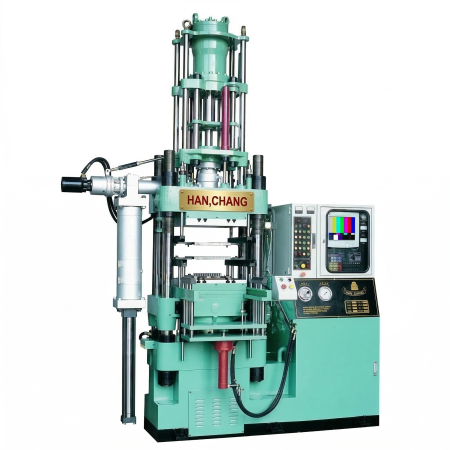
Machine advantages
For factories working with solid silicone compounds, this machine provides a strip-fed injection route with staged pressure and flow control and mold venting. Select the equipment around your material, part geometry and tool—not clamping force alone—to align shot capacity, mold fit and operator access.
An injection route for solid compound
A screw prepares the silicone strip before the hydraulic plunger delivers compound into the mold. This gives solid-silicone processors a clear injection equipment choice built around their material format and tooling.
Control filling and mold movement
Three pressure stages and four flow stages apply to both injection and the overall hydraulic cycle. Adjust these conditions to suit compound flow, runners and differences in part wall thickness.
Venting alongside the mold design
Mold-opening and closing venting provides an additional way to address trapped gas. For multi-cavity keypads and thin sleeves, plan this action together with tool vents and gate locations.
Match curing with practical part removal
Silicone cures in the heated mold before the operator removes the parts. Compound cure conditions, wall thickness and release direction guide tool and machine selection, including working space for flexible sleeves and keypads.
Solid silicone injection and curing process
Load solid silicone strip
The operator supplies solid silicone strips at the feed position. Choose the compound grade, hardness and color for the finished part, with the feed dimensions suited to the selected machine.
Feed and preplasticize
The screw conveys and preplasticizes the compound in preparation for plunger injection. Shot demand includes every cavity and the runners, rather than the weight of one part alone.
Inject into the closed mold
The overhead hydraulic plunger injects silicone into the already closed mold. Staged pressure and flow control support injection and hydraulic movements; mold-opening and closing venting is also available.
Heat cure and remove parts
The silicone cures in the mold, which then opens for manual removal. Mold opening and release direction must provide workable access for the part geometry; trimming or inspection follows as required.
Materials and solid silicone part applications
The Han Chang solid silicone injection molding machine processes solid silicone rubber—commonly described as high-consistency rubber (HCR) or HTV silicone—to produce keypads, sealing plugs, protective sleeves, grips and molded ear plugs. These components use silicone’s elasticity and molded profiles for push-button operation, sealing, protection and soft contact in electronics, tools and everyday products.
Silicone keypads for remotes and equipment controls
Silicone keypads provide flexible push-button elements for remote controls, appliances and equipment panels. Elastic deformation and recovery contribute to the operating feel. Tooling can form individual buttons or connected keypads with pressing surfaces, thin flexing sections and connecting webs.
The plunger injects preplasticized compound through runners into a closed mold to form the keypad profile. Staged pressure and flow settings provide filling adjustments for varying section thicknesses, supporting manufacturers planning shaped keypad components and multi-cavity production.
Sealing plugs and sleeves for interfaces and component protection
Silicone plugs close electronic or equipment interfaces, using an elastic fit to form a seal. Protective sleeves surround components to reduce direct impact, rubbing or contact with hard surfaces. Plugs rely on their sealing contact, while sleeves provide a protective covering.
Tooling forms the plug’s sealing profile and pull feature or the sleeve’s covering shape. Injection followed by heat curing in the mold produces the component. Water resistance depends on the finished design, compound and assembly, not the molding machine alone.
Silicone grips for tools and everyday products
Silicone grips and grip sleeves provide a softer contact surface at hand-held parts of tools and everyday products. Molded contours and surface textures can be designed around finger contact and the way the product is held.
The machine can produce separately molded silicone grips or sleeves for subsequent assembly, forming their internal and external profiles in the mold. Manufacturers can make the soft gripping component separately from the tool body, then assemble it according to the product design.
Molded silicone ear plugs for soft, shaped contact
Molded silicone ear plugs combine flexible material with a profile intended to fit the contact area. Tooling defines the shape and handling features; comfort depends on matching the design, size and compound hardness.
For manufacturers using solid silicone compound, plunger injection and a suitably designed multi-cavity mold provide a route to repeat production. Ear plugs sold for hearing protection require finished-product testing to establish noise-reduction performance.
Specifications and machine selection
Compare the five model tables for clamping force, platen dimensions, stroke, maximum shot volume and strip dimensions. Start with tool fit and total shot demand, then match the machine footprint, electrical supply and working space to your factory.
Spec/Type HCR-500
| Clamping force (Ton) | 150 |
|---|---|
| Plate size (m/m) | 360×460 |
| Cylinder diameter (m/m) | 300/315 |
| Stroke (m/m) | 410 |
| Motor (HP) | 10 |
| Heater power (Kw) | 7.7 |
| Maximum shot volume (C.C) | 500/1000 |
| Screw (m/m) | 45 |
| Screw speed (RPM) | 0-120 |
| Material size(Txw) (m/m) | 10×46 |
| Kerosene pump (HP) | 1/2 |
| Oil reservoir capacity (gallon) | 100 |
| Machine size LXWXH (m/m) | 2430x1990x3330 |
| Net weight approx (kg) | 5500 |
Spec/Type HCR-1000
| Clamping force (Ton) | 200 |
|---|---|
| Plate size (m/m) | 520×520 |
| Cylinder diameter (m/m) | 368 |
| Stroke (m/m) | 500 |
| Motor (HP) | 15 |
| Heater power (Kw) | 13 |
| Maximum shot volume (C.C) | 1000/1500 |
| Screw (m/m) | 45 |
| Screw speed (RPM) | 0-120 |
| Material size(Txw) (m/m) | 10×46 |
| Kerosene pump (HP) | 1/2 |
| Oil reservoir capacity (gallon) | 150 |
| Machine size LXWXH (m/m) | 2790x2080x3700 |
| Net weight approx (kg) | 6800 |
Spec/Type HCR-1500
| Clamping force (Ton) | 200 |
|---|---|
| Plate size (m/m) | 520×520
520×580 |
| Cylinder diameter (m/m) | 368 |
| Stroke (m/m) | 500 |
| Motor (HP) | 15 |
| Heater power (Kw) | 13 |
| Maximum shot volume (C.C) | 1500/2000 |
| Screw (m/m) | 45 |
| Screw speed (RPM) | 0-120 |
| Material size(Txw) (m/m) | 10×46 |
| Kerosene pump (HP) | 1/2 |
| Oil reservoir capacity (gallon) | 150 |
| Machine size LXWXH (m/m) | 2790x2080x3700 |
| Net weight approx (kg) | 7000 |
Spec/Type HCR-2000
| Clamping force (Ton) | 300 |
|---|---|
| Plate size (m/m) | 570×585
620×650 |
| Cylinder diameter (m/m) | 450 |
| Stroke (m/m) | 600 |
| Motor (HP) | 20 |
| Heater power (Kw) | 16.5 |
| Maximum shot volume (C.C) | 2000/2500 |
| Screw (m/m) | 45 |
| Screw speed (RPM) | 0-120 |
| Material size(Txw) (m/m) | 10×46 |
| Kerosene pump (HP) | 1/2 |
| Oil reservoir capacity (gallon) | 165 |
| Machine size LXWXH (m/m) | 2860x2280x4050 |
| Net weight approx (kg) | 9000 |
Spec/Type HCR-4000
| Clamping force (Ton) | 500 |
|---|---|
| Plate size (m/m) | 700×720 |
| Cylinder diameter (m/m) | 560 |
| Stroke (m/m) | 700 |
| Motor (HP) | 25 |
| Heater power (Kw) | 18.5 |
| Maximum shot volume (C.C) | 3000/4000 |
| Screw (m/m) | 50 |
| Screw speed (RPM) | 0-120 |
| Material size(Txw) (m/m) | 10×46 |
| Kerosene pump (HP) | 1/2 |
| Oil reservoir capacity (gallon) | 200 |
| Machine size LXWXH (m/m) | 2900x2350x4000 |
| Net weight approx (kg) | 13000 |
Shot capacity in C.C. is a volume, not the same number of grams. Include all cavities and runners and use the compound density when relating shot weight to volume. Mold thickness, mounting dimensions, opening travel and the removal method also affect the equipment choice.
Tooling and equipment quotations
Send a silicone part drawing or photo with the compound grade and hardness. If a mold already exists, add its dimensions, cavity count and total shot demand so Han Chang can compare suitable injection capacity, clamp force and platens.
Equipment price depends on the model and supply configuration. Tool mounting, feed and removal arrangements, factory power and installation space help define that scope. If the tool is still in development, begin with part dimensions and planned output.
Buyer questions
Is this a solid silicone machine or an LSR machine?
This is a solid silicone injection molding machine using manually supplied strip, screw feeding and preplasticizing, and hydraulic plunger injection. Liquid silicone rubber (LSR) typically uses A/B component metering and mixing. Identify the actual material format before choosing the equipment.
Which silicone parts can it produce?
The Han Chang solid silicone injection molding machine produces silicone keypads for remotes and equipment controls, sealing plugs for electronic or equipment interfaces, protective sleeves, grips for tools and everyday products, and molded ear plugs for soft contact. Each uses solid silicone compound and application-specific tooling to provide push-button operation, sealing, protection or gripping functions.
What pressure, flow and venting controls are provided?
Both injection and the overall hydraulic cycle have three pressure stages and four flow stages. The machine also has mold-opening and closing venting. These controls are matched to the compound, runners, cavities and part geometry to adjust filling and mold movement.
How should I compare shot capacity and clamping force?
Calculate the total material for all cavities and runners, then relate weight to volume using compound density. Clamping force also depends on projected tool area and molding pressure. Check platen dimensions, mold thickness, stroke and removal space rather than selecting tonnage by cavity count alone.
How does solid silicone injection differ from compression molding?
This machine preplasticizes the compound and uses a plunger to inject it into an already closed mold. Direct compression molding places the compound in the mold before closing and pressing. The feed method, runners, tooling and operator tasks differ, so compare them against your material, parts and existing tools.
What information is needed for a machine quotation?
Start with part photos or drawings, silicone grade and hardness, part weight and planned output. If available, include mold dimensions, cavity count, runner material and removal method, plus the local supply voltage. Han Chang can then outline an appropriate model and supply configuration.
Choose equipment for your solid silicone parts
Send Han Chang a part drawing or photo to begin. Compound grade, hardness, cavity count and shot demand—where available—help us recommend a suitable solid silicone injection moulding machine and prepare your quotation.