
Three-Color Melamine Tableware Molding Machine
Han Chang’s three-color melamine machine is a hydraulic compression molding press for melamine molding compound. It hot-presses bowls, plates, cups and trays with contrasting top, bottom and rim colors. Select single-, two- or three-color production. Three-color work combines manual charges, part retention in one lower mold and automatic shifting of three upper molds.
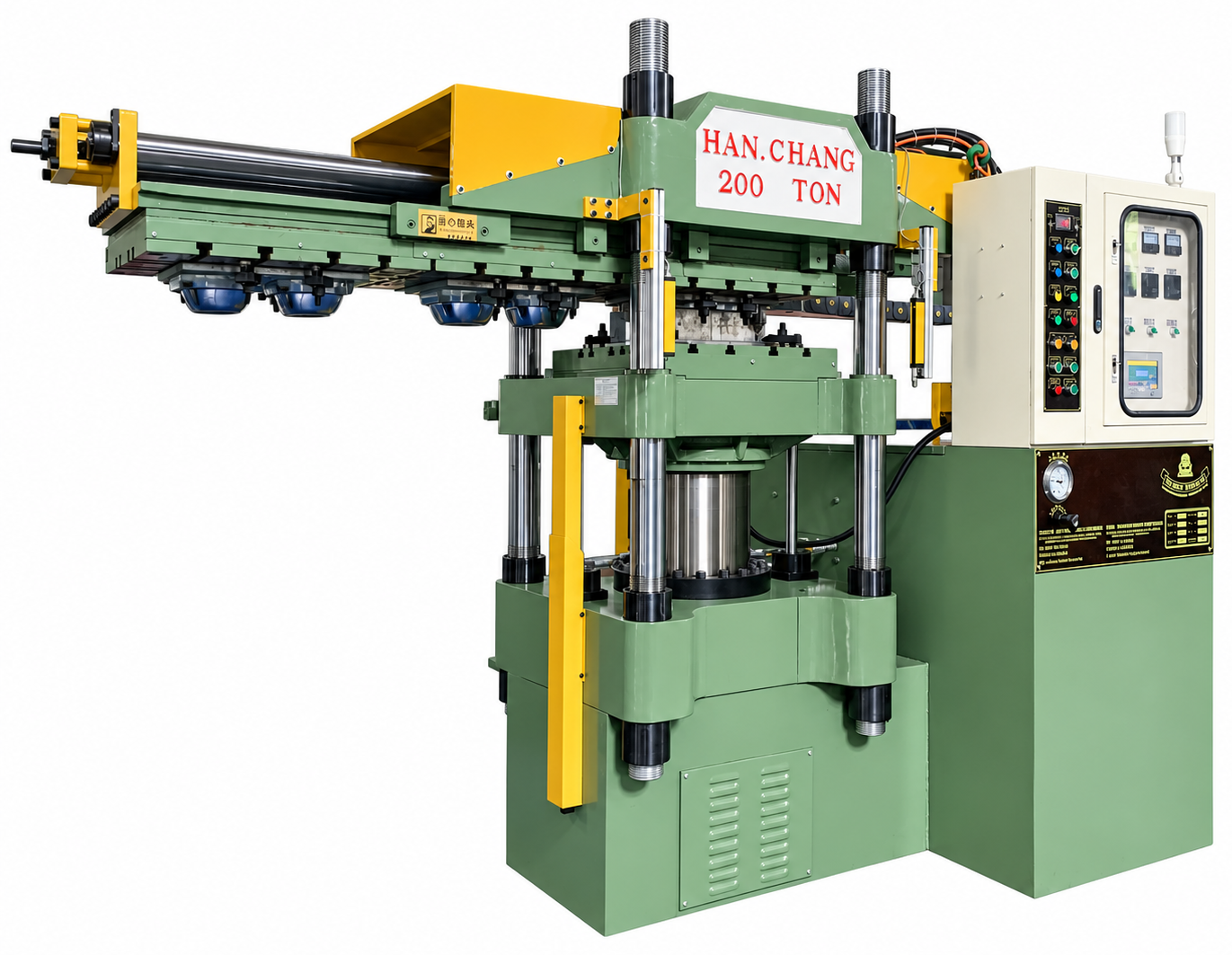
More machine photographs
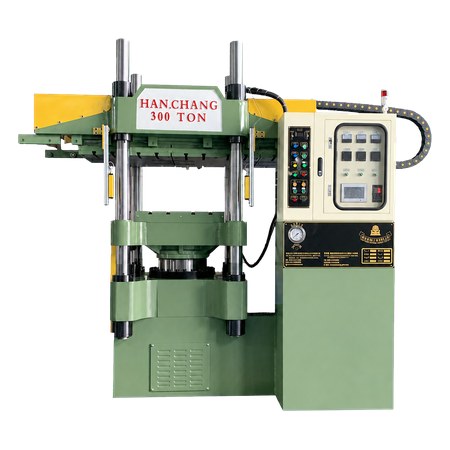
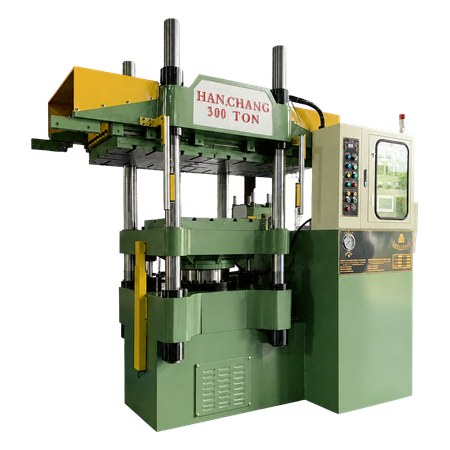
Machine advantages
Keep single-, two- and three-color orders in the plan
The press lets you select single-, two- or three-color production rather than reserving the machine for triple-color orders alone. Plan the mode around the product and tooling, supporting suitable existing work while adding three-color designs to the range.
Make the third color part of the tableware body
Successive charges and three matched upper molds create body-color layers, including contrasting top, bottom and rim designs. This gives melamine crockery manufacturers a product-design option beyond changing a printed decal. The color arrangement comes from the compound and tooling, not extra colors in surface artwork.
Keep the developing part in one lower mold
During three-color production, each charge is loaded manually and the intermediate part stays in the same lower mold after pressing. The machine shifts the upper molds automatically. Subsequent layers form around the retained part without transferring it to another press and placing it again.
Set venting around the actual molding job
Set the degassing count up to 99 to suit the melamine compound, charge quantity and tooling. Coordinated pressure, mold temperature and holding conditions help control gas release and surface forming.
Sequential color molding, flexible production choices
Three-color work builds the first, intermediate and outer layers in successive pressing stages. The operator loads each charge, the part remains in the lower mold, and the machine shifts the upper molds into position. Mold geometry, charge placement and the amount of each color together determine the color boundaries.
Selectable single-, two- and three-color modes support different tableware body designs. Decals add artwork, while glazing finishes the surface. Automatic mold shifting keeps successive color-pressing stages in one working area, supporting a varied product range.
Official Han Chang video · Watch on YouTube
Choose the body-color mode
Separate charges and matched tooling create contrasting top, bottom and rim colors for bowls, plates, cups and trays.
Choose single-, two- or three-color mode to match the order and tooling, keeping the press useful across different body-color designs.
Arrange decoration and gloss
Lettering, logos and detailed patterns belong to the decoration choice. A multicolor decal does not change a single-color body into a three-color molded product.
Melamine tableware requires glazing powder. Decal and glazing additions each have their own treatment stage, arranged to suit the product design.
Plan body colors, artwork and surface gloss around the intended product range, then match the tooling and production arrangement.
Where a three-color press earns its place
Develop contrasting body-color designs
Develop melamine dinner plates, rice bowls, soup bowls, cups and serving trays with contrasting top, bottom and rim colors. Restaurant ranges can use a distinct rim color alongside the upper and lower body colors; household dinnerware and trays can follow the same design direction using the corresponding tooling for each item. A three-color melamine crockery making machine builds the third color into the molded body, giving factories another design choice alongside optional decal artwork. Choose the color combination around the intended range, with product profile, depth and color boundaries matched to the tooling.
Combine established work with new designs
Consider the three-color press when single- or two-color orders remain important and a third body-color layer is part of product development. If all planned work uses single-color bodies with decals, compare a single-color press. For only two body colors, compare the tooling and investment of a two-color machine as well.
Compare 150–400 Ton models by tooling fit
Choose from 150, 200, 300 and 400 ton three-color presses. The tables below list platen dimensions, daylight and stroke for comparing the tooling space each model provides.
For three-color tooling, include the lower mold and all three upper molds in the space and weight assessment. Daylight, stroke, removal clearance and shifting space matter for deeper bowls and cups. The installation layout also needs working access for charging, mold changes and maintenance.
Plan the three-color product and equipment investment together
A third upper tool and separate color charges expand the range of tableware designs the factory can offer. Han Chang can quote a three-color melamine moulding machine or production-line package around the color modes, cavity count, existing tooling, preheating and finishing equipment you need.
Expand each model for complete specifications. Platen sizes and machine weights correspond to the selected equipment configuration.
Spec / Type HCMT-150
| Clamping force (Ton) | 150 |
|---|---|
| Plate size (m/m) | 660×620 |
| Cylinder diameter (m/m) | 300/315 |
| Stroke (m/m) | 480 |
| Daylight (m/m) | 700 |
| Pump pressure (kg/cm2) | 210 |
| Motor (HP) | 7.5 |
| Heater capacity (Kw) | 10.6 |
| Oil reservoir capacity (gallon) | 100 |
| Machine size LxWxH (m/m) | 2030x1350x2370 |
| Net weight approx (kg) | 4800 |
Spec / Type HCMT-200
| Clamping force (Ton) | 200 |
|---|---|
| Plate size (m/m) | 660×620
720×720 |
| Cylinder diameter (m/m) | 368 |
| Stroke (m/m) | 500 |
| Daylight (m/m) | 820 |
| Pump pressure (kg/cm2) | 210 |
| Motor (HP) | 10 |
| Heater capacity (Kw) | 15.2 |
| Oil reservoir capacity (gallon) | 120 |
| Machine size LxWxH (m/m) | 2300x1350x2670 |
| Net weight approx (kg) | 5700
7500 |
Spec / Type HCMT-300
| Clamping force (Ton) | 300 |
|---|---|
| Plate size (m/m) | 720×720
900×860 |
| Cylinder diameter (m/m) | 450 |
| Stroke (m/m) | 560 |
| Daylight (m/m) | 810 |
| Pump pressure (kg/cm2) | 210 |
| Motor (HP) | 15 |
| Heater capacity (Kw) | 20 |
| Oil reservoir capacity (gallon) | 200 |
| Machine size LxWxH (m/m) | 2480x1490x2945 |
| Net weight approx (kg) | 8200
11000 |
Spec / Type HCMT-400
| Clamping force (Ton) | 400 |
|---|---|
| Plate size (m/m) | 720×720
900×860 |
| Cylinder diameter (m/m) | 500 |
| Stroke (m/m) | 560 |
| Daylight (m/m) | 950 |
| Pump pressure (kg/cm2) | 210 |
| Motor (HP) | 15 |
| Heater capacity (Kw) | 27 |
| Oil reservoir capacity (gallon) | 250 |
| Machine size LxWxH (m/m) | 2580x1500x3800 |
| Net weight approx (kg) | 9000
12000 |
Controls, repeat setups and production-line support
Han Chang is a melamine molding machine manufacturer and a supplier of preheating and finishing equipment for complete melamine tableware production lines. The company has factories in Taiwan and Mainland China, with customer-service and professional repair departments at the Mainland factory supporting equipment use and maintenance.
Recipe and parameter memory
Store product, mold, compound, shifting and compression settings. Repeat work or mold changes can start from an established setup rather than entering the complete parameter set again.
Mitsubishi PLC and Fuji Electric touchscreen
Controls manage mold shifting, positioning, hydraulics, heating, degassing, holding and alarms, bringing machine settings and operation together.
Operating and repair support
Installation checks, operating guidance and replacement-part coordination support equipment use. Fault videos, control screens, alarms and machine movements help identify the appropriate technical response.
Melamine-line equipment supply
High-frequency preheaters, edge grinders, polishing machines and decal-paper dryers can support the molding process. Plan equipment around an existing factory expansion or the material preparation, molding and finishing needs of a new line.
Three-color melamine machine buyer questions
Is three-color melamine molding different from multicolor decal decoration?
Yes. Three-color molding forms contrasting layers within the melamine tableware body, including top, bottom and rim designs. Decals add surface artwork, lettering or logos. A single-color body can carry a multicolor decal, so the required body-color structure—not the number of printed colors—determines whether three-color molding is needed.
Can this three-color machine also produce single- and two-color tableware?
Yes. Select single-, two- or three-color production to accommodate different orders on the same press. Share existing-tool photos and dimensions so Han Chang can discuss suitable mounting and adaptations for the chosen product and mode.
Are the three material charges automatic, and does the part move to another press?
The operator adds the three charges separately. After each pressing stage, the part stays in the same lower mold while the machine automatically shifts the upper molds for the next color. Part retention and automatic shifting keep the successive color-forming stages on one press.
Can three-color tableware use decals, and how is glazing arranged?
Yes. Arrange decal decoration for artwork, lettering or logos; those details need not be formed by the body-color layers. Melamine tableware still requires glazing powder. Decal and glazing treatment have their own operations, with the production arrangement matched flexibly to the product and tooling.
How do I choose between 150, 200, 300 and 400 Ton models?
Select force from the compound, total projected cavity area and molding requirements, then match platen size, tool weight, daylight and stroke. Allow space for the three upper molds and their movement. A tableware drawing or existing-tool information provides a useful starting point with Han Chang.
Can existing single-, two- or three-color tooling be reused?
The press supports the different color modes, while tool reuse depends on mounting dimensions, weight, fastening, heating, release and shifting requirements. Check the tools actually needed for the intended product and mode. For a three-color set, all three upper tools must match the lower mold and available machine space.
What determines three-color melamine tableware output?
Cavity count, preparation and manual loading of each color, pressing and venting, product thickness, optional decal work, glazing and removal all affect the production cycle. Preheating and finishing must also keep pace. Plan output around the real product and mode rather than converting press tonnage directly into a daily production figure.
What does parameter memory do for repeat orders or a new compound batch?
Parameter memory recalls an established setup for the same product and tool, helping repeat orders restart with familiar settings. Adjust for changes in compound batches, charge quantities and tool condition; coordinate charge placement and mold positioning for the intended color boundaries.
What equipment can be supplied for a melamine crockery production line?
Han Chang can supply molding presses, high-frequency preheaters, edge grinders, polishing machines and decal-paper dryers. An existing factory adding three-color products can integrate suitable current preparation and finishing equipment; a new line can plan those functions together rather than treating the press as the entire factory.
What should a three-color melamine machine quotation include?
Compare force, platen dimensions, daylight, stroke, heating, mold shifting, controls and guarding, then distinguish tooling and ancillary equipment from the press price. Product photos or drawings, intended body colors, compound, dimensions, cavities and current equipment help define a useful machine or line quotation. The buyer does not need to choose a tonnage before discussing the application.
Related Reading: Melamine Molding and Line Planning
Use these guides to connect melamine molding quality with production-line planning: flash, bubbles, uneven thickness, compound preparation, tooling, degassing and pressure holding. They help you coordinate preheating and finishing around the different color modes and products.
- Melamine molding problems: burrs, bubbles, uneven thickness and demolding stability
- Melamine molding production line planning: press, preheater, mold and operator workflow planning
- Commercial melamine tableware molding equipment: equipment planning by tableware size, cavity count and output target

-80x80.jpg)