
One Synchronized UF Toilet Seat Press, Two Production Strategies: Same-Part Runs or Ring-and-Lid Pairing
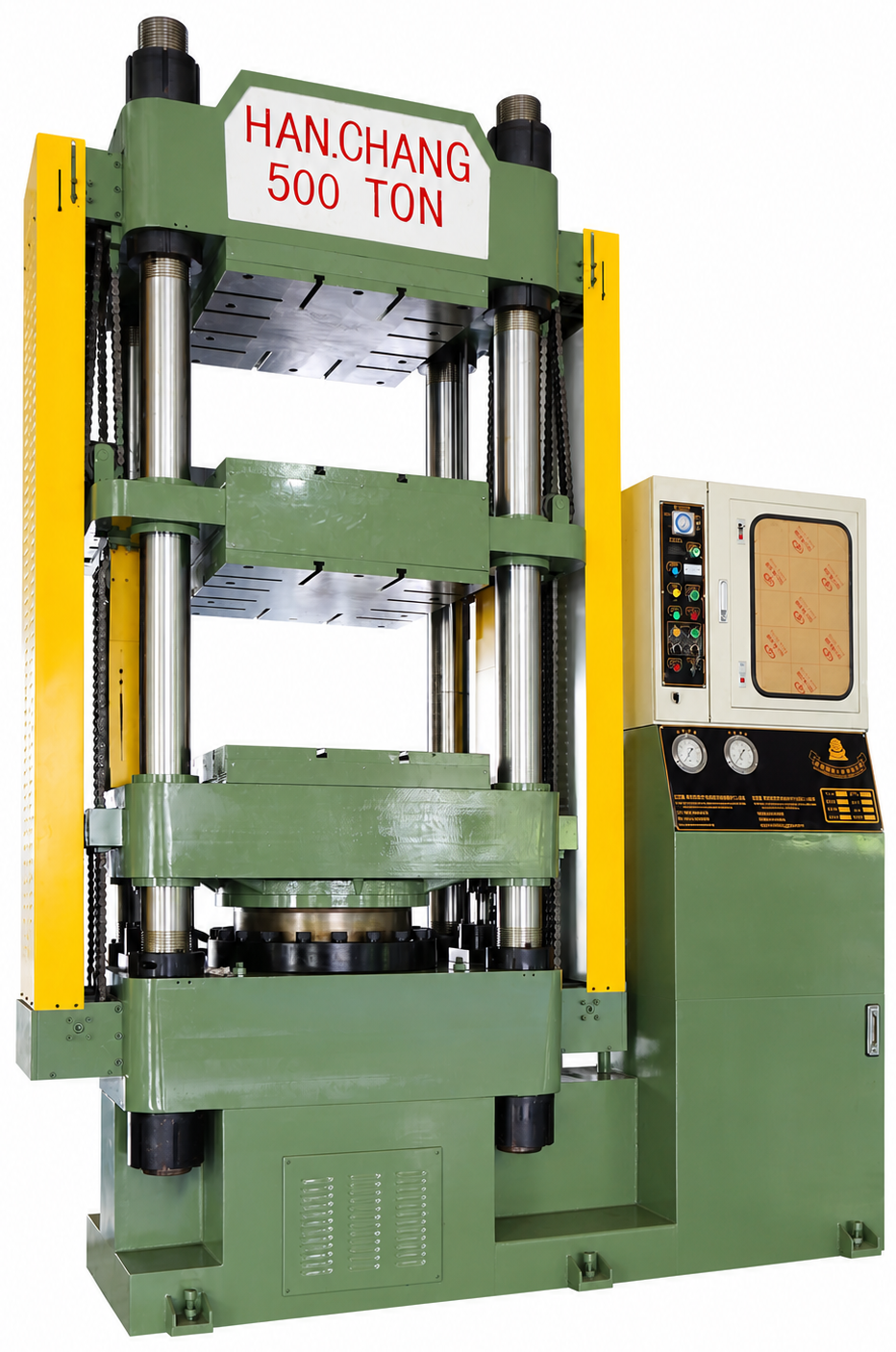
Han Chang’s synchronized double-layer urea toilet seat molding machine carries one mold set on each working level and uses chain-linked platens so that closing, degassing and opening move together. This layout is not limited to making the same part on both levels. When the two molds have equal overall thickness and the UF/UMC material and hot-compression conditions are compatible, a factory can also pair a toilet seat ring with its matching lid. The purchasing value is practical: one double-layer UF toilet seat press can be organized around either repeat production of one SKU or coordinated production of a matched set, while both mold levels follow the same mechanical timing.
Same-part runs or ring-and-lid pairing: decide in three steps
Chain-synchronized value: both mold levels close, degas and open together; output and staffing still follow the real parts, tools and validated cycle.
Two useful production strategies from one synchronized machine
Strategy 1: run the same part on both levels
For a factory with recurring orders for one seat ring, one lid or another fixed sanitary part, both levels can be fitted with the same type of tool. The chain-synchronized double-layer press closes, degasses and opens both molds at the same time, giving the operator one clear machine rhythm for material preparation, loading, part removal and inspection.
The advantage is not a blanket promise of “double output.” It is a more concentrated way to organize a repeat SKU. Raw-material lots, tool condition, first-piece approval and routine inspection can be managed within one production plan, which is valuable when a few core toilet-seat models account for a large share of the order mix.
Strategy 2: pair the seat ring and lid
When customers order complete toilet-seat sets, the upper and lower levels may instead carry the ring mold and the corresponding lid mold. Han Chang’s synchronized double-layer UF toilet seat moulding machine keeps the two mold levels moving together, allowing two compatible components to be organized inside one press rather than waiting for unrelated machine schedules.
This arrangement works when the molds have the same overall thickness and the parts can share a compatible UF/UMC molding window. Compound preparation, mold temperature, degassing, pressure holding and curing requirements must support one common cycle. When that condition is proven, the press offers more than same-part repetition: it can help the factory align molding work with matched-set delivery.
What chain synchronization contributes to production
This machine does not depend on the upper level starting first and the lower level following later. It also does not claim synchronization merely because hydraulic oil is divided toward two levels. Han Chang connects the upper and lower platens with a chain system, so mold closing, degassing and opening occur with zero-second mechanical timing difference.
That design gives the production team three clear benefits:
- One coordinated machine rhythm: both levels enter molding, degassing and opening together, so the operator is not tracking two independent platen-motion sequences.
- A manageable two-mold layout: whether the plan is same-part production or ring-and-lid pairing, both tools operate within one coordinated motion cycle.
- Structural support for stable production: neither level is mechanically waiting for the other to catch up. Final part quality still depends on the compound, tool condition and validated process settings, but the platen-motion sequence is no longer a source of upper-versus-lower delay.
Choose the strategy by four production conditions
1. Does the order mix favor one component or complete sets?
Long runs of one ring or one lid usually favor the same-part strategy. If shipment quantities are managed as complete ring-and-lid sets, pairing the two components can better follow the delivery structure. The decision starts with what the factory must ship—not with the word “double-layer” alone.
2. Can both molds be built to equal overall thickness?
Equal mold thickness is a core requirement for synchronized upper and lower motion. For different parts, the toolmaker should align the total installed height, mounting reference and practical opening space during mold design. Trying to pair unrelated finished tools after the fact is not the right basis for a synchronized production plan.
3. Can both parts share a compatible hot-compression cycle?
A toilet seat ring and lid may belong to the same product family, but charge weight, preheating condition, mold temperature, degassing sequence, pressure holding and cure response still have to be validated. A suitable pair is one that can form stable parts inside the same UF/UMC production cycle.
4. Can loading, removal and cleaning follow the common rhythm?
Chain synchronization coordinates the press motion; it does not automate weighing, loading, core work, removal, cleaning or inspection. Workpiece weight, daylight, removal path and handling aids still determine the practical cell arrangement. Including those tasks in the selection study is how the machine’s synchronized capacity becomes usable factory performance.
Where this synchronized double-layer press fits best
Han Chang’s double-layer urea toilet seat cover press is a strong choice for manufacturers with repeat UF/UMC sanitary-part orders, a need to place two mold sets within one machine footprint, and a preference for coordinated upper/lower motion rather than two independent sequences. Confirmed applications include toilet seat rings, lids, washbasins and other thermoset sanitary components; the actual mold pairing follows the products and process conditions.
If the plant’s main business is a fixed ring, lid or high-repeat sanitary part, start with a same-part layout. If sales are managed as complete toilet-seat sets, bring equal mold thickness and a common cycle into the tooling discussion from the beginning. That is where a synchronized double-layer press earns its place: two molding jobs are concentrated in one machine and mechanically coordinated by one chain-linked system.
Send the right data for press selection and a quotation
For a useful proposal, share part drawings or photos, ring and lid weights, UF/UMC compound and preheating method, mold dimensions and overall thickness, current molding cycle, intended same-part or matched-set strategy, factory voltage and required automation. Han Chang can then review the products, tools and production plan together instead of quoting a double-layer machine by tonnage alone.
Review the synchronized double-layer urea toilet seat molding machine, compare the UF toilet seat and cover molding machine range, or contact Han Chang to discuss mold pairing and press selection.