
Carbon Fiber / Glass Fiber Hot Press Molding Machine
Han Chang’s Carbon Fiber / Glass Fiber Hot Press Molding Machine combines hydraulic force with mold heating to shape and cure carbon-fiber- or glass-fiber-reinforced composite molding materials. This composite compression molding press supports consistent quality and efficient production of bicycle components, sporting goods, automotive parts and electronics housings.
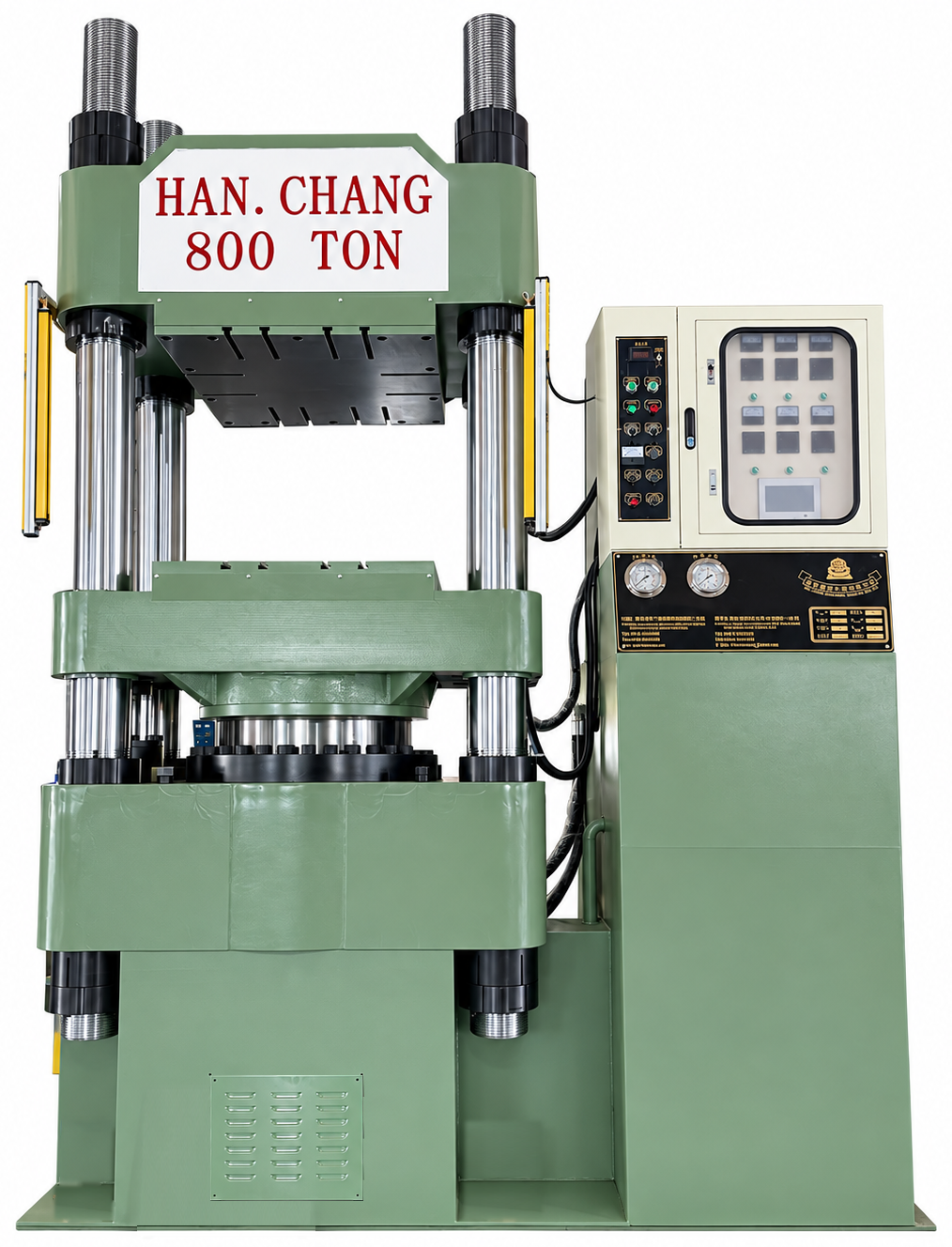
Machine advantages
Select from 37–800 ton clamping-force specifications and add an optional upper or lower ejector to suit the mold. For manufacturers introducing composite parts, adding a hot press or selecting equipment for existing tooling, this machine brings molding capacity and practical part release into the same equipment decision.
Heat and compression for composite parts
The press applies heat and force through the mold to shape and cure a suitable composite charge. Matching the material’s process requirements with the tooling provides a practical foundation for consistent molded-part quality.
One machine type for both material families
The press supports both carbon fiber and glass fiber product applications, giving manufacturers a useful equipment choice across composite product lines. Each part uses its appropriate molding material, tool and curing conditions.
Make mold release part of the equipment choice
An optional upper or lower ejector can assist part release in line with the mold’s ejection design. Addressing where the part remains after opening helps make removal smoother and improve handling efficiency.
Select usable mold space as well as force
Compare platen size, daylight and stroke alongside clamping force. This helps you select a press that accommodates the tool and its opening requirements, with room for loading and part removal.
Heated compression molding
Load the composite charge
Place a suitable carbon-fiber- or glass-fiber-reinforced composite molding material into the mold according to the part and tooling requirements.
Close, heat and compress
Close the mold and apply heat and pressure to form and cure the part. The molding temperature, pressure and cure time follow the requirements of the selected material and part.
Open the mold and remove the part
After curing, open the mold and remove the molded component. Where specified, an upper or lower ejector assists release through the mold’s ejection arrangement before the next charge is loaded.
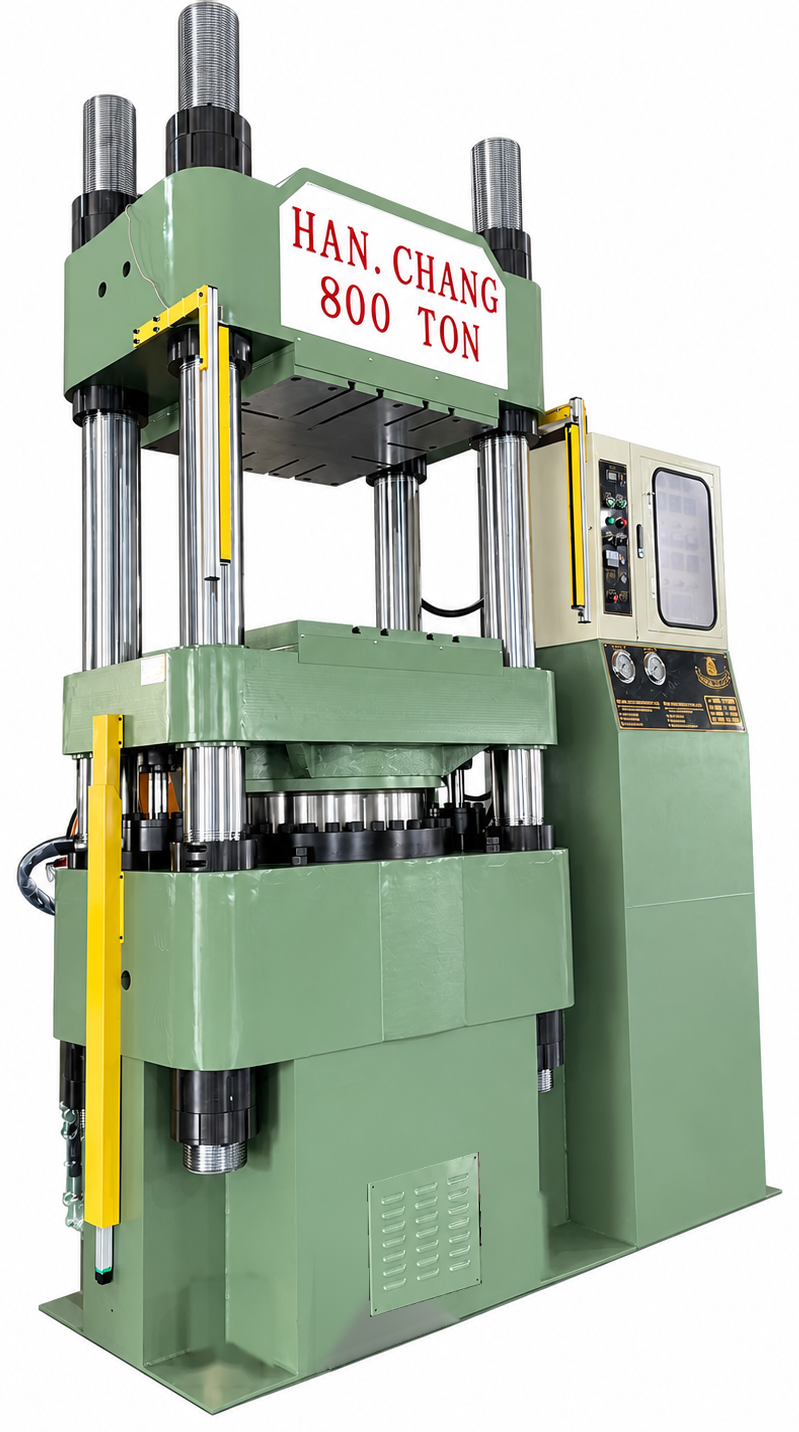
Materials and applications
Bicycle components and sporting goods
Produce composite molding components for bicycle frames, forks, one-piece handlebars and carbon fiber wheel rims, as well as rackets and skis. The tool defines the part shape; suitable platen and opening dimensions accommodate the component-specific mold.
Automotive and helmet shells
Applications include rear spoilers, mirror housings, front-lip aerodynamic parts, battery-pack housings and helmet shells. For these shaped parts, mold-based heated compression combines forming and curing, while optional ejection supports practical part release.
UAV structures and electronics housings
Drone bodies and wings, laptop housings and protective covers for consumer electronics are part of the application range. Suitable carbon fiber or glass fiber composite molding materials bring lightweight component designs into a heated molding process.
Medical and assistive-device components
Composite X-ray table panels and prosthetic or orthotic components can be planned around their respective tooling and cure requirements. Finished medical products and helmets require testing and qualification for their intended use.
Industrial grippers and electrical enclosures
Robotic gripper components use composite structures selected for the component design. Electrical insulating enclosures use an appropriate glass-fiber-reinforced molding material and mold design suited to the electrical application.
Specifications and selection
Compare 12 model specifications, from HCB-37 through HCB-800, with clamping forces of 37–800 ton. Use the model data to review platen size, daylight, stroke and heater capacity against your mold and material requirements.
Model HCB-37
| Clamping force (Ton) | 37 |
|---|---|
| Plate size (m/m) | 330×340 |
| Cylinder diameter (m/m) | 150 |
| Stroke (m/m) | 370 |
| Daylight (m/m) | 450 |
| Pump pressure (kg/cm2) | 210 |
| Motor (HP) | 3 |
| Heater capacity (Kw) | 4.8 |
| Oil reservoir capacity (gallon) | 56 |
| Machine size LxWxH (m/m) | 1384x 900x 1690 |
| Net weight approx (kg) | 1100 |
Model HCB-50
| Clamping force (Ton) | 50 |
|---|---|
| Plate size (m/m) | 380×380 |
| Cylinder diameter (m/m) | 190 |
| Stroke (m/m) | 370 |
| Daylight (m/m) | 600 |
| Pump pressure (kg/cm2) | 210 |
| Motor (HP) | 3 |
| Heater capacity (Kw) | 5 |
| Oil reservoir capacity (gallon) | 56 |
| Machine size LxWxH (m/m) | 1555x 1050x 2060 |
| Net weight approx (kg) | 1400 |
Model HCB-80
| Clamping force (Ton) | 80 |
|---|---|
| Plate size (m/m) | 485×465 |
| Cylinder diameter (m/m) | 236 |
| Stroke (m/m) | 410 |
| Daylight (m/m) | 630 |
| Pump pressure (kg/cm2) | 210 |
| Motor (HP) | 3 |
| Heater capacity (Kw) | 7.6 |
| Oil reservoir capacity (gallon) | 70 |
| Machine size LxWxH (m/m) | 1720x1200x2115 |
| Net weight approx (kg) | 2750 |
Model HCB-100
| Clamping force (Ton) | 100 |
|---|---|
| Plate size (m/m) | 540×605 |
| Cylinder diameter (m/m) | 265 |
| Stroke (m/m) | 460 |
| Daylight (m/m) | 690 |
| Pump pressure (kg/cm2) | 210 |
| Motor (HP) | 5 |
| Heater capacity (Kw) | 10.6 |
| Oil reservoir capacity (gallon) | 100 |
| Machine size LxWxH (m/m) | 1940x1200x2370 |
| Net weight approx (kg) | 3700 |
Model HCB-150
| Clamping force (Ton) | 150 |
|---|---|
| Plate size (m/m) | 660×620 |
| Cylinder diameter (m/m) | 300/315 |
| Stroke (m/m) | 480 |
| Daylight (m/m) | 700 |
| Pump pressure (kg/cm2) | 210 |
| Motor (HP) | 7.5 |
| Heater capacity (Kw) | 10.6 |
| Oil reservoir capacity (gallon) | 100 |
| Machine size LxWxH (m/m) | 2030x1350x2370 |
| Net weight approx (kg) | 4000 |
Model HCB-200
| Clamping force (Ton) | 200 |
|---|---|
| Plate size (m/m) | 660×620
720×720 |
| Cylinder diameter (m/m) | 368 |
| Stroke (m/m) | 500 |
| Daylight (m/m) | 820 |
| Pump pressure (kg/cm2) | 210 |
| Motor (HP) | 10 |
| Heater capacity (Kw) | 15.2 |
| Oil reservoir capacity (gallon) | 120 |
| Machine size LxWxH (m/m) | 2300x1350x2670 |
| Net weight approx (kg) | 4500
5700 |
Model HCB-250
| Clamping force (Ton) | 250 |
|---|---|
| Plate size (m/m) | 720×720 |
| Cylinder diameter (m/m) | 400 |
| Stroke (m/m) | 520 |
| Daylight (m/m) | 810 |
| Pump pressure (kg/cm2) | 210 |
| Motor (HP) | 10 |
| Heater capacity (Kw) | 18.8 |
| Oil reservoir capacity (gallon) | 150 |
| Machine size LxWxH (m/m) | 2410x1350x2780 |
| Net weight approx (kg) | 5800
6200 |
Model HCB-300
| Clamping force (Ton) | 300 |
|---|---|
| Plate size (m/m) | 720×720
900×860 |
| Cylinder diameter (m/m) | 450 |
| Stroke (m/m) | 560 |
| Daylight (m/m) | 810 |
| Pump pressure (kg/cm2) | 210 |
| Motor (HP) | 15 |
| Heater capacity (Kw) | 20 |
| Oil reservoir capacity (gallon) | 200 |
| Machine size LxWxH (m/m) | 2480x1490x2945 |
| Net weight approx (kg) | 6500
8200 |
Model HCB-400
| Clamping force (Ton) | 400 |
|---|---|
| Plate size (m/m) | 660×620 720×720 980×860 |
| Cylinder diameter (m/m) | 500 |
| Stroke (m/m) | 560 |
| Daylight (m/m) | 950 |
| Pump pressure (kg/cm2) | 210 |
| Motor (HP) | 15 |
| Heater capacity (Kw) | 27 |
| Oil reservoir capacity (gallon) | 250 |
| Machine size LxWxH (m/m) | 2580x1500x3800 |
| Net weight approx (kg) | 6500
7200 8200 |
Model HCB-500
| Clamping force (Ton) | 500 |
|---|---|
| Plate size (m/m) | 800×800
900×900 1140×1100 |
| Cylinder diameter (m/m) | 560 |
| Stroke (m/m) | 580 |
| Daylight (m/m) | 1000 |
| Pump pressure (kg/cm2) | 210 |
| Motor (HP) | 15 |
| Heater capacity (Kw) | 30 |
| Oil reservoir capacity (gallon) | 250 |
| Machine size LxWxH (m/m) | 2810x1705x3135 |
| Net weight approx (kg) | 12000
13500 15800 |
Model HCB-600
| Clamping force (Ton) | 600 |
|---|---|
| Plate size (m/m) | 900×900
1200×1140 |
| Cylinder diameter (m/m) | 620 |
| Stroke (m/m) | 610 |
| Daylight (m/m) | 1020 |
| Pump pressure (kg/cm2) | 210 |
| Motor (HP) | 20 |
| Heater capacity (Kw) | 30 |
| Oil reservoir capacity (gallon) | 300 |
| Machine size LxWxH (m/m) | 3000x1750x4100 |
| Net weight approx (kg) | 14200
16000 |
Model HCB-800
| Clamping force (Ton) | 800 |
|---|---|
| Plate size (m/m) | 1800×1400 |
| Cylinder diameter (m/m) | 700 |
| Stroke (m/m) | 700 |
| Daylight (m/m) | 1060 |
| Pump pressure (kg/cm2) | 210 |
| Motor (HP) | 30 |
| Heater capacity (Kw) | 40 |
| Oil reservoir capacity (gallon) | 355 |
| Machine size LxWxH (m/m) | 3220x1850x4350 |
| Net weight approx (kg) | 26000 |
Select clamping force around the material’s molding pressure, projected molding area and cavity count. Match platen dimensions, daylight and stroke to the mold footprint, closed height and opening needed for loading and removal. Existing mold drawings are welcome when discussing the press.
Mold and press selection
Start with the part, not a completed specification
A drawing, photo or approximate part size is enough to begin a selection discussion. Add the intended material and output target so the press and tooling requirements can be developed around your production needs.
Check the fit of an existing mold
Share the mold footprint, closed height, mounting arrangement and opening clearance. These inputs help compare platen dimensions, daylight and stroke before selecting a specification.
Build ejection into the quotation
Identify which mold half retains the part and how the tool is designed to eject it. Include the required upper or lower ejector option in the equipment discussion so it is addressed in the quotation.
Buyer questions
Is this a composite compression molding press?
Yes. Han Chang’s Carbon Fiber / Glass Fiber Hot Press Molding Machine applies heat and compression in a mold to form and cure suitable fiber-reinforced composite molding materials. It is intended for molded components such as bicycle parts, automotive shells and electronic housings.
Which carbon fiber or glass fiber material should I specify?
Specify a composite molding material suited to your part and heated curing process. Share the material supplier’s data, including the resin system and recommended molding temperature, pressure and cure time, so the material requirements can be matched to the press configuration.
How do I choose the clamping force?
Use the material’s required molding pressure, the projected molding area and the number of cavities as the starting inputs, then check the tooling and machine requirements. This press offers 37–800 ton specifications. A part drawing and material data help narrow the choice before quotation.
What do daylight and stroke mean for my mold?
Daylight is the maximum opening between the platens; stroke is the available platen travel. Compare both with the mold’s closed height and the opening needed for loading and part removal, while checking the mold footprint against the platen size.
Can I specify an upper or lower ejector?
Yes. An upper or lower ejector is available as an option on request. Select it according to the mold half retaining the part, the tool’s ejection design and the intended removal method, and include that choice in the quotation requirements.
What determines the production rate?
Plan around the material’s molding and cure time, the number of cavities, and the time needed for loading, opening and part removal. Sharing those inputs together with your output target makes the equipment discussion more useful than selecting on tonnage alone.
How can I request a price for the press?
Send Han Chang a part drawing or photo, the intended molding material and your production target. If you already have tooling, add its dimensions and ejection arrangement. The quotation can then address the selected press specification and any upper or lower ejector option.
Find the right press for your composite part
Send Han Chang a product drawing or photo and tell us which carbon-fiber- or glass-fiber-reinforced molding material you plan to use. We can discuss the clamping force, mold space and optional ejection arrangement for an equipment quotation matched to your project.